




- March 18, 2026

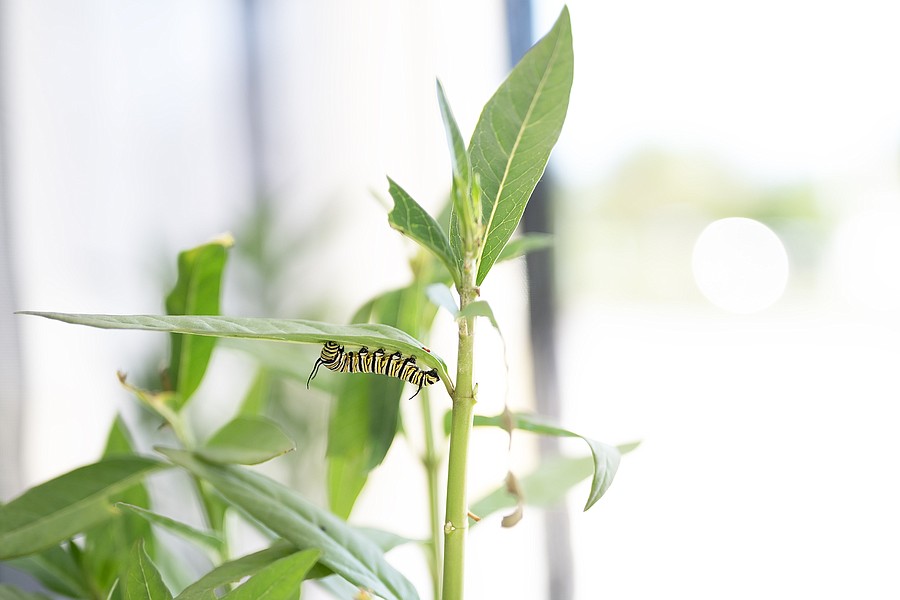
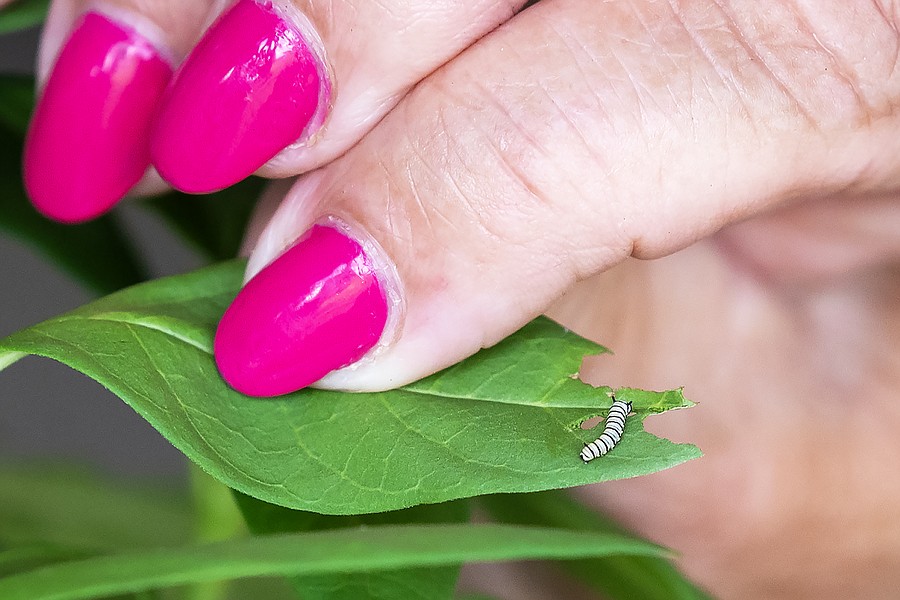
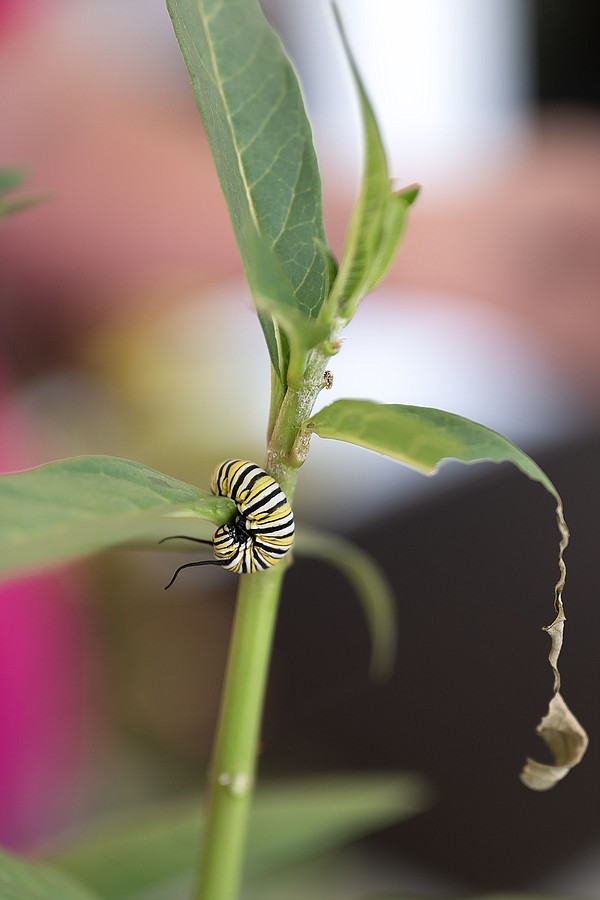
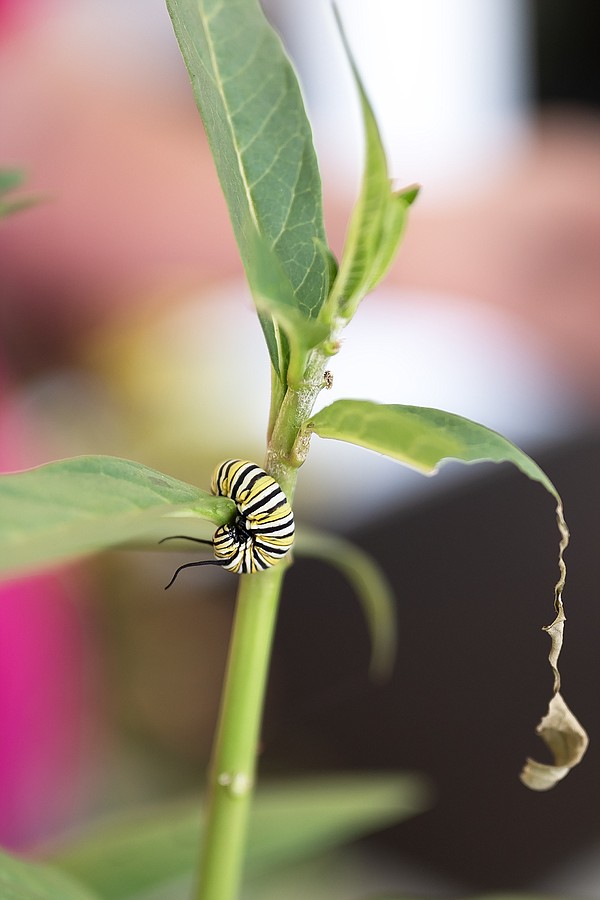
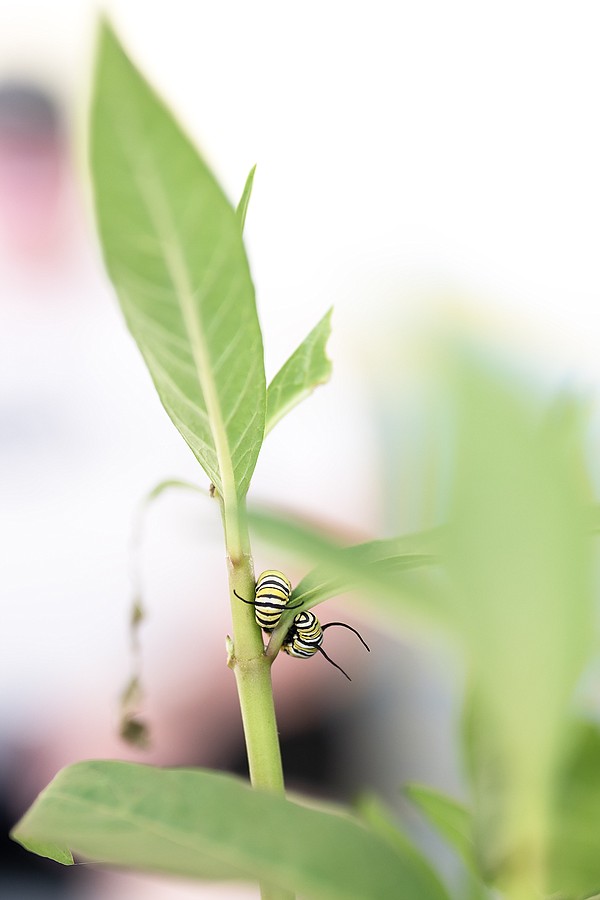
A specimen monarch caterpillar attaches itself to the bottom of a milkweed leaf to munch on it until it disappears. Photo by Michele Meyers
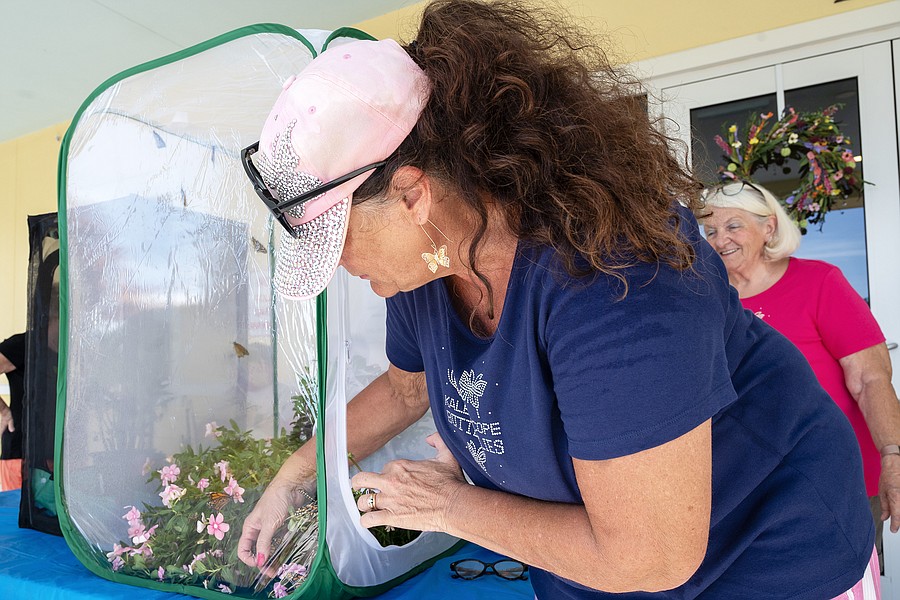
Colleen Anderson reaches into the butterfly habitat to show the group one of the friendly monarchs. Photo by Michele Meyers
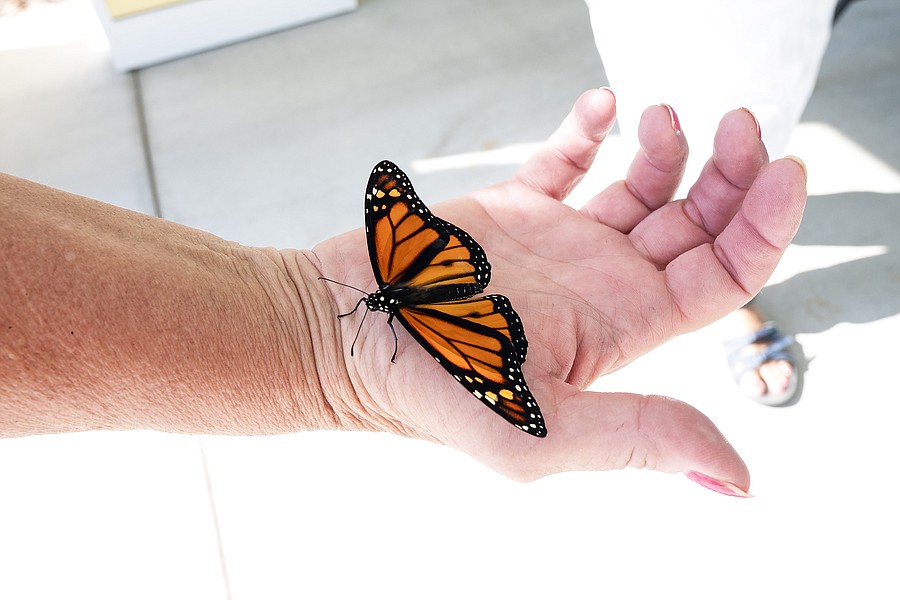
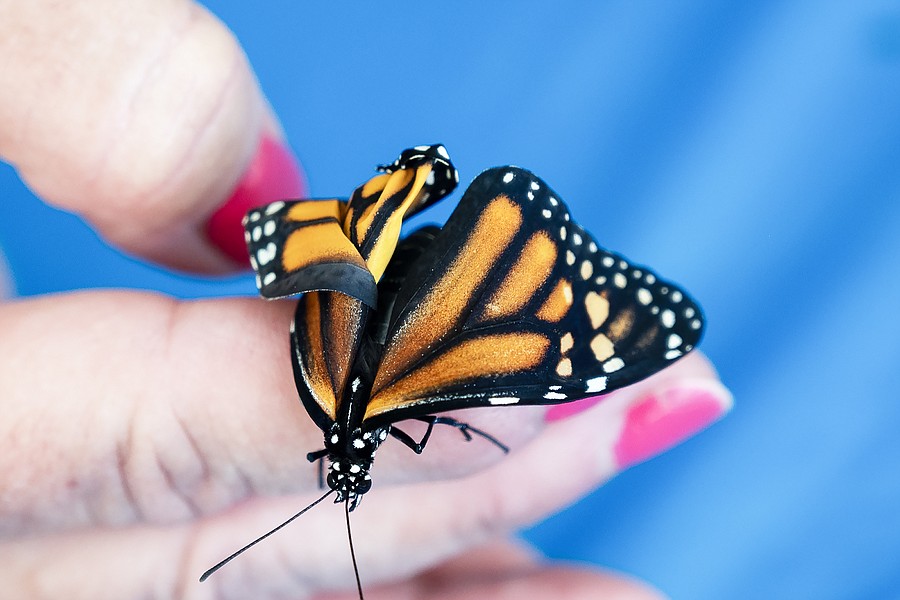
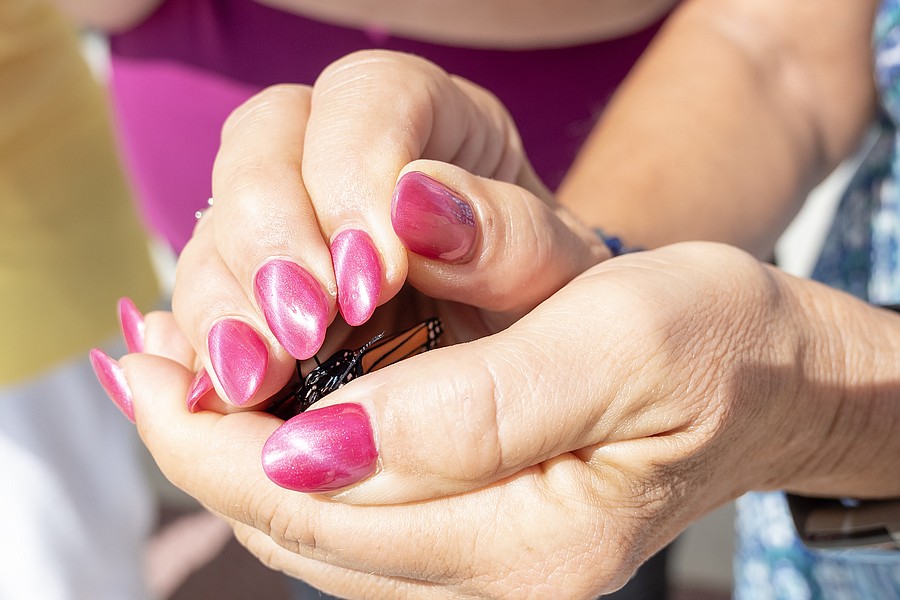
A monarch butterfly spreads its wings as it perches on Colleen Anderson's hand. The monarch was raised in a butterfly habitat by one of the Kaleidoscope Butterflies members. Photo by Michele Meyers
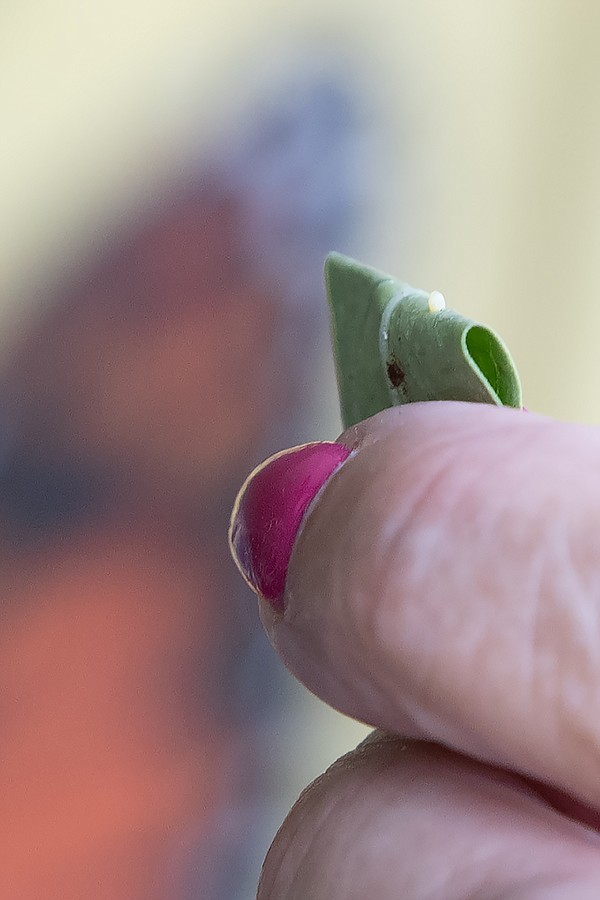
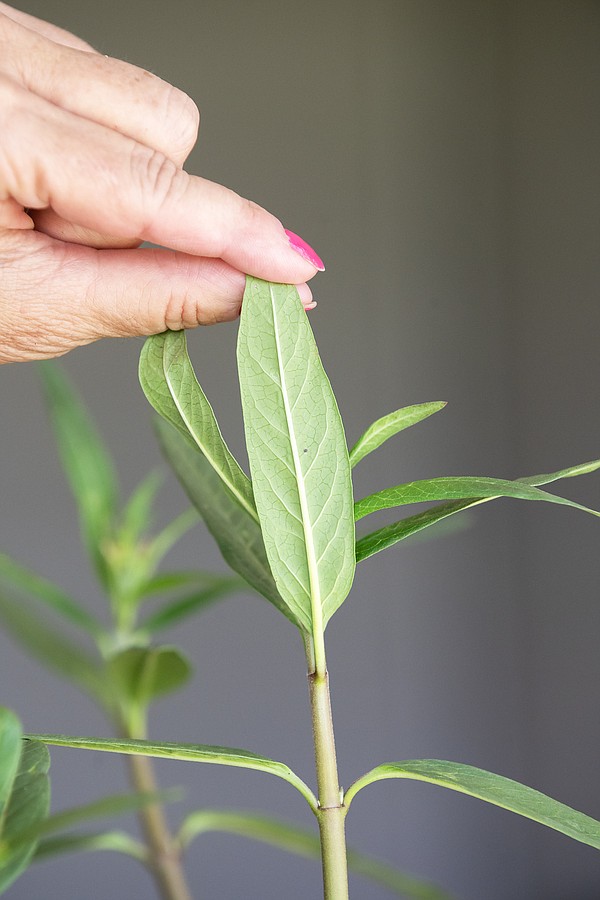
The monarch butterfly lays her pale colored eggs on the bottom of the milkweed plant leaves. Photo by Michele Meyers
Monarch butterfly eggs start turning dark on the top when the head of the caterpillar is developing. It will chew through and eat the egg when it is fully developed. Here, the tiny egg is in the middle of the leaf. Photo by Michele Meyers
According to the Monarch Butterfly Life website, once the monarch caterpillar emerges from the egg, it eats constantly for approximately two weeks, only stopping to shed its skin as it grows. Photo by Michele Meyers
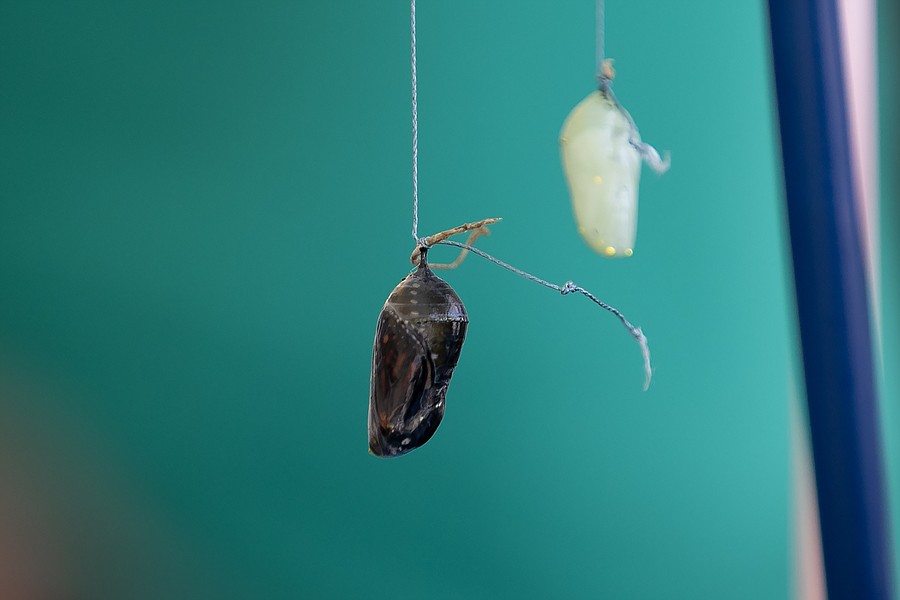
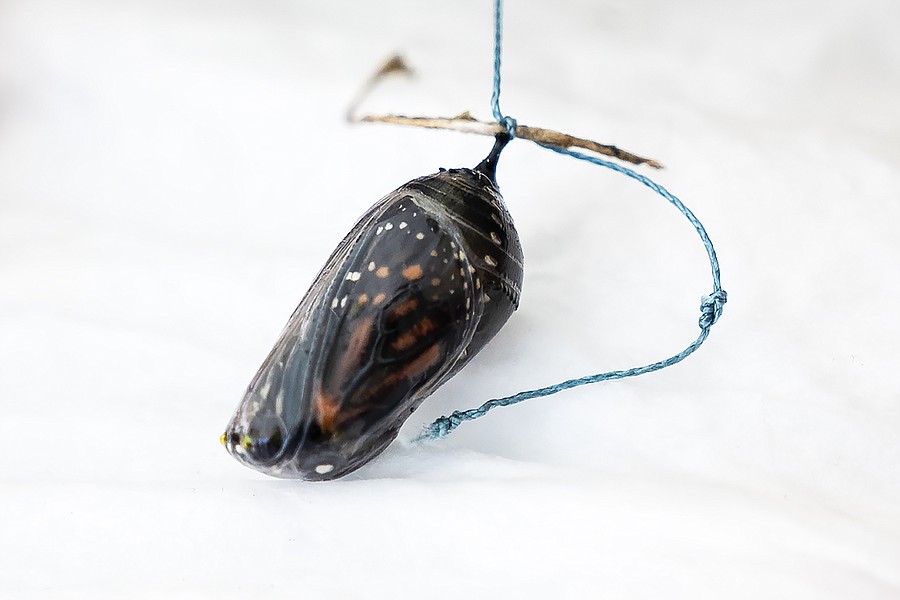
A monarch caterpillar will pupate after approximately two weeks and hang in chrysalis form until it becomes an adult. The wings and some of the details of the butterfly can be seen in the dark chrysalis before it emerges. Photo by Michele Meyers
A monarch caterpillar creates its own refuge in chrysalis form before becoming an adult butterfly. The chrysalis appears dark before the Monarch emerges. Photo by Michele Meyers
Butterfly wings can be seen through the outer casing of the chrysalis as the pupa becomes an adult and is ready to emerge. Photo by Michele Meyers
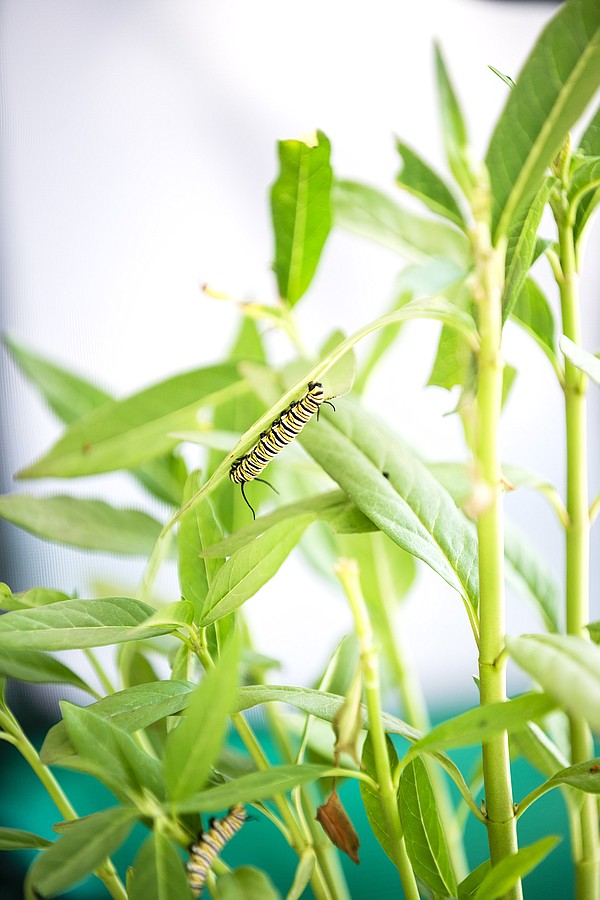
The Monarch caterpillar spends its time eating the leaves off of Milkweed plants, growing and shedding its skin. Photo by Michele Meyers
The monarch caterpillar spends its time eating the leaves off of milkweed plants, growing and shedding its skin. Photo by Michele Meyers
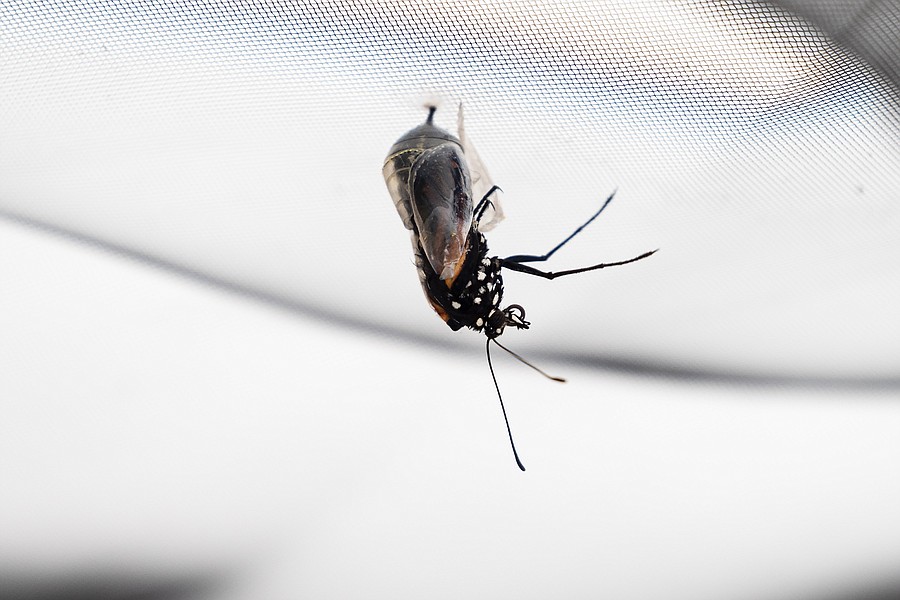
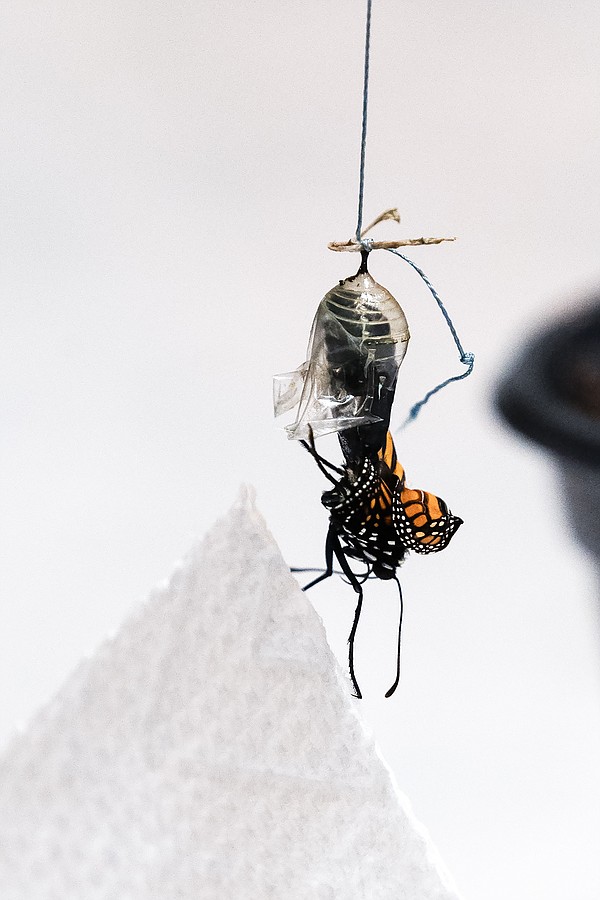
The monarch butterfly begins to break out of the chrysalis shell when it becomes an adult pupa. Photo by Michele Meyers
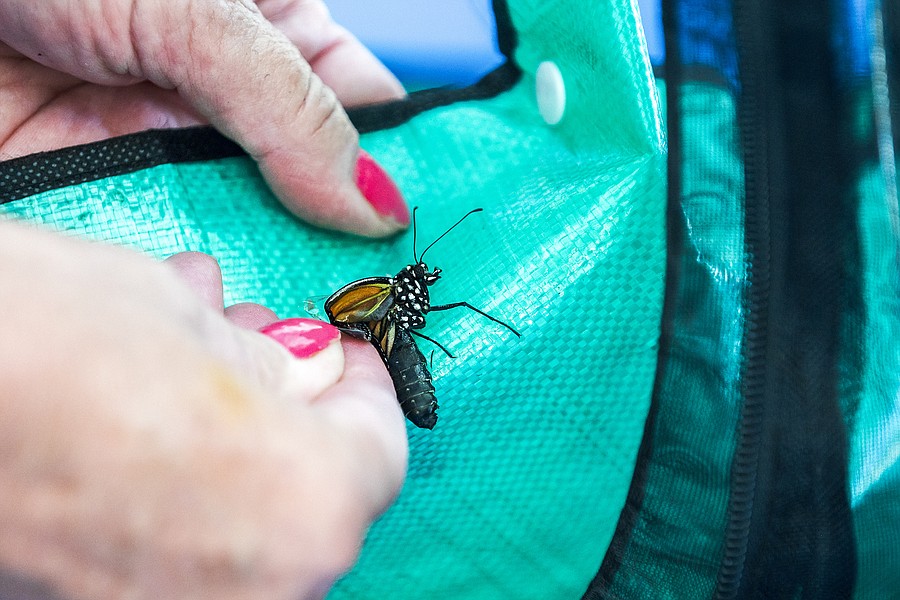
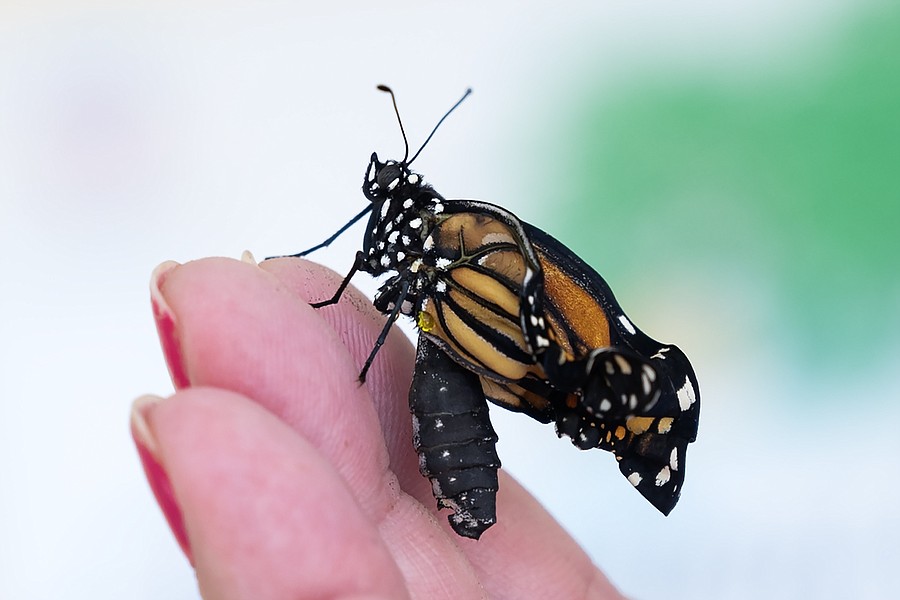
Colleen Anderson helps Crinkle shed the chrysalis shell. Photo by Michele Meyers
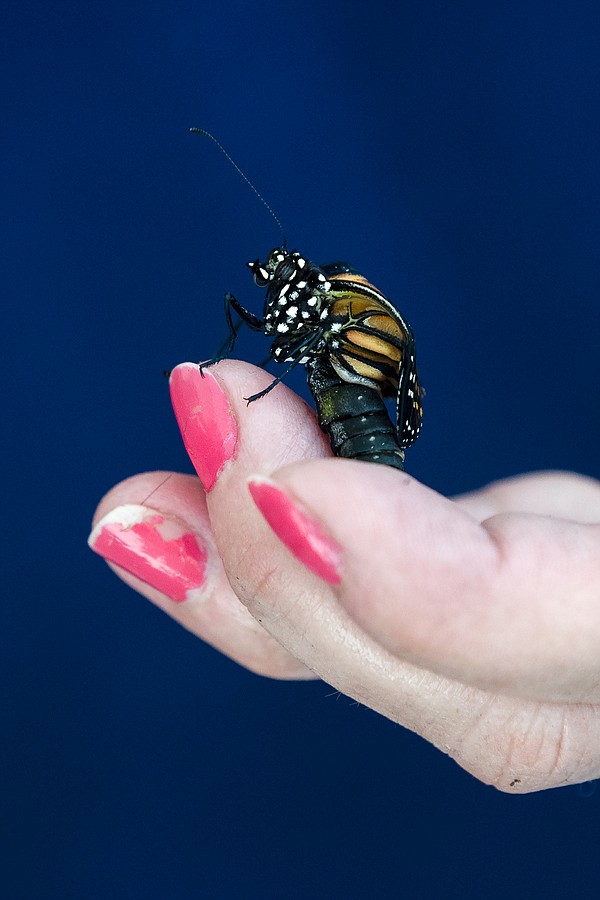
A new arrival perches on top of Colleen Anderson's fingers. The butterfly will start moving its wings so fluid from the abdomen will flow into the wings. Photo by Michele Meyers
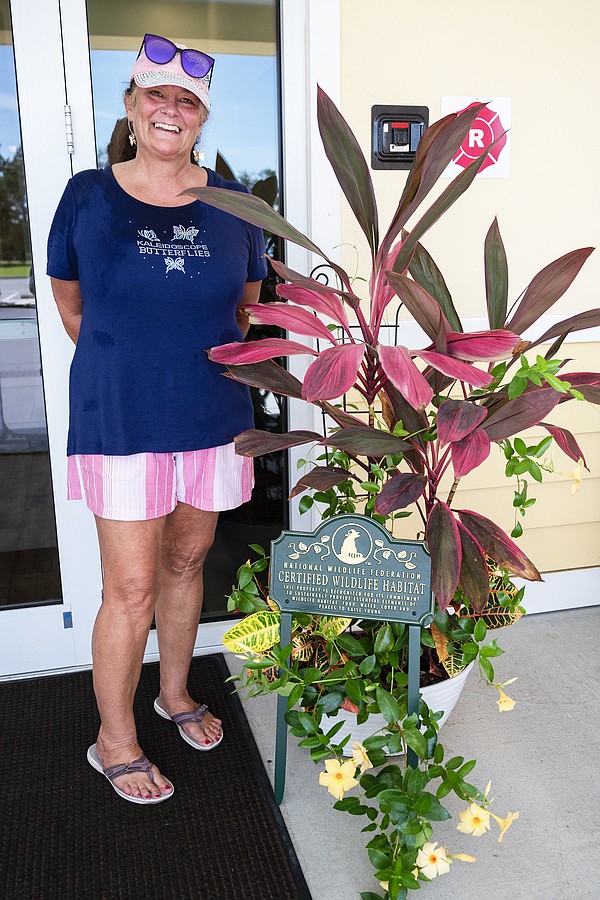
Plantation Oaks of Ormond Beach is now a certified wildlife habitat thanks to the efforts of resident Colleen Anderson. Photo by Michele Meyers
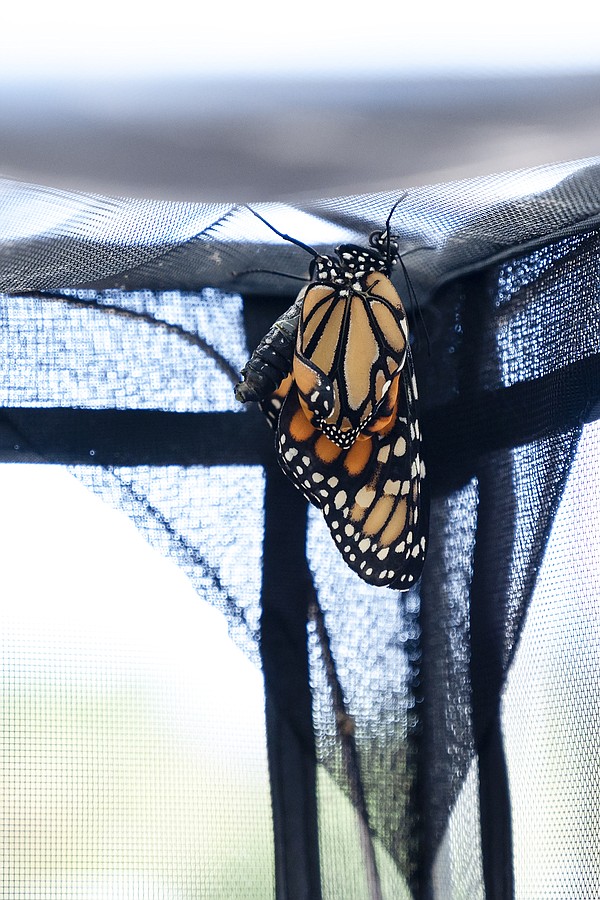
A new butterfly hangs in a habitat while fluid moves from its abdomen to its wings. Photo by Michele Meyers
A monarch butterfly expands its wings by pumping hemolymph from the abdomen into the wings. Photo by Michele Meyers
Crinkle's wings did not properly open after she had a tough time coming out of the chrysalis. She currently enjoys orange slices in the large habitat and likes to crawl on Colleen for fun. Photo by Michele Meyers
A monarch butterfly hangs from the chrysalis shell as it tries to break free. Photo by Michele Meyers
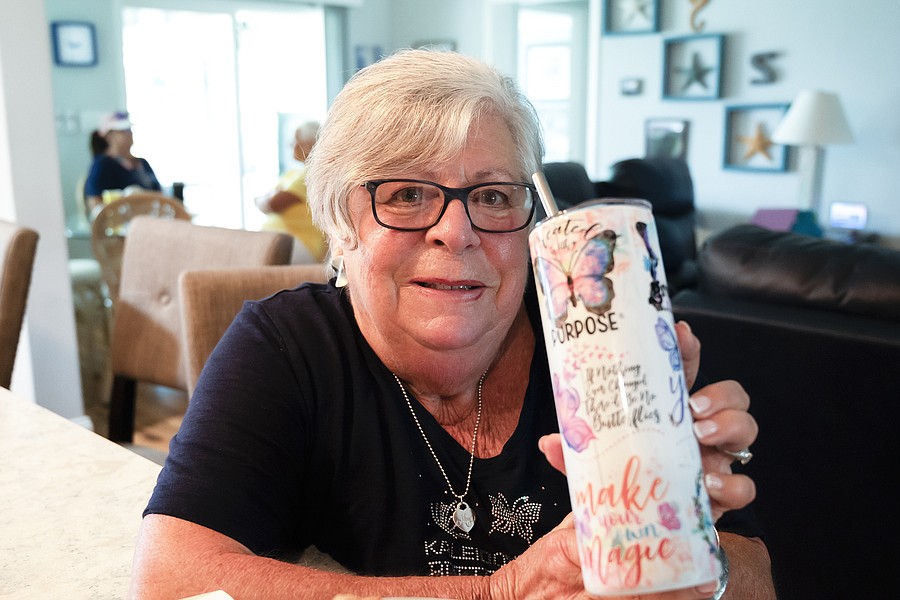
Gail Schuck shows off her butterfly travel cup. She also has a butterfly tattooed on her ankle that she got in California on her 70th birthday. Photo by Michele Meyers
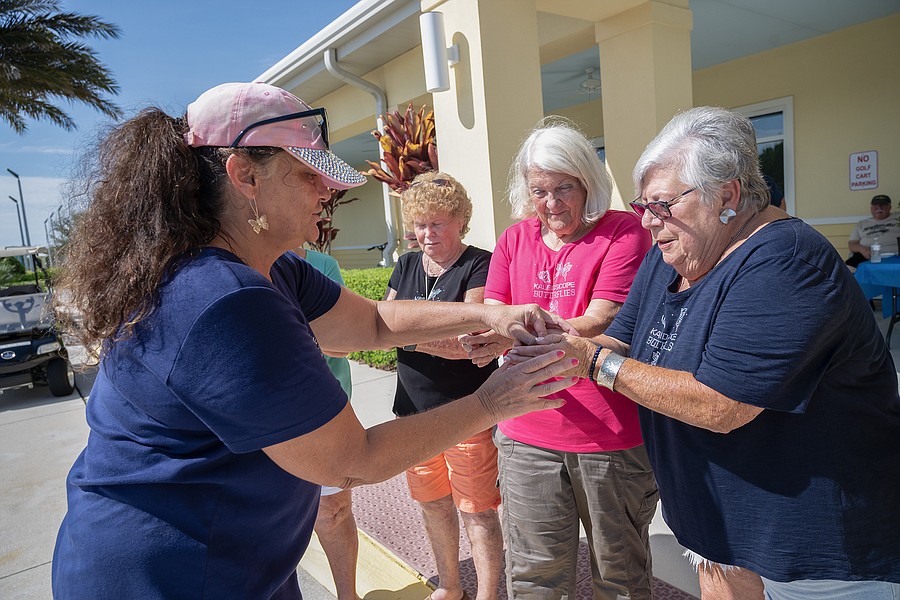
Colleen Anderson (left) hands Gail Shuck (right) a butterfly she will be releasing. Photo by Michele Meyers
The Kaleidoscope Butterflies group release their monarch butterflies at the Plantation Oaks clubhouse in Ormond Beach. Photo by Michele Meyers
The Kaleidoscope Butterflies group at the Plantation Oaks clubhouse in Ormond Beach. Photo by Michele Meyers
The Kaleidoscope Butterflies group release their monarch butterflies at the Plantation Oaks clubhouse in Ormond Beach. Photo by Michele Meyers
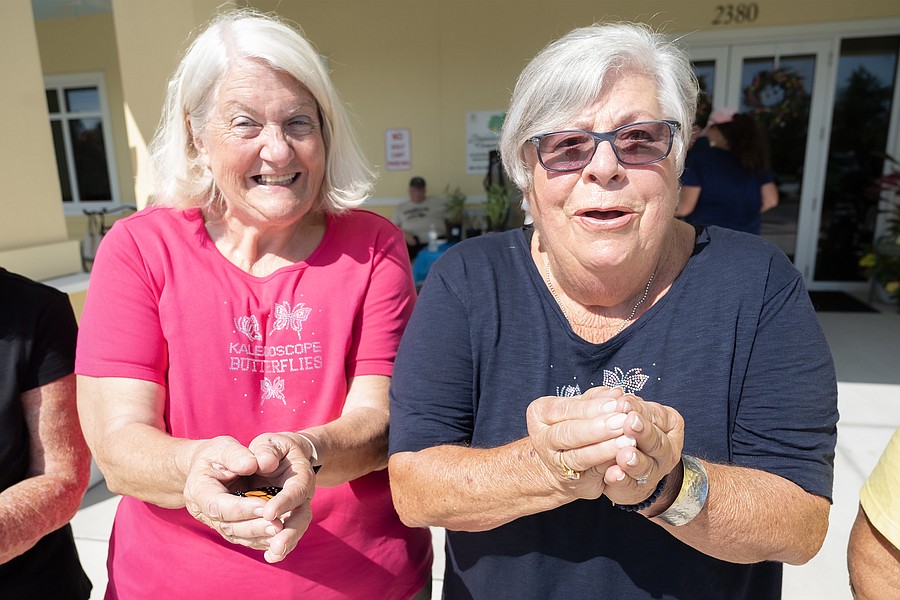
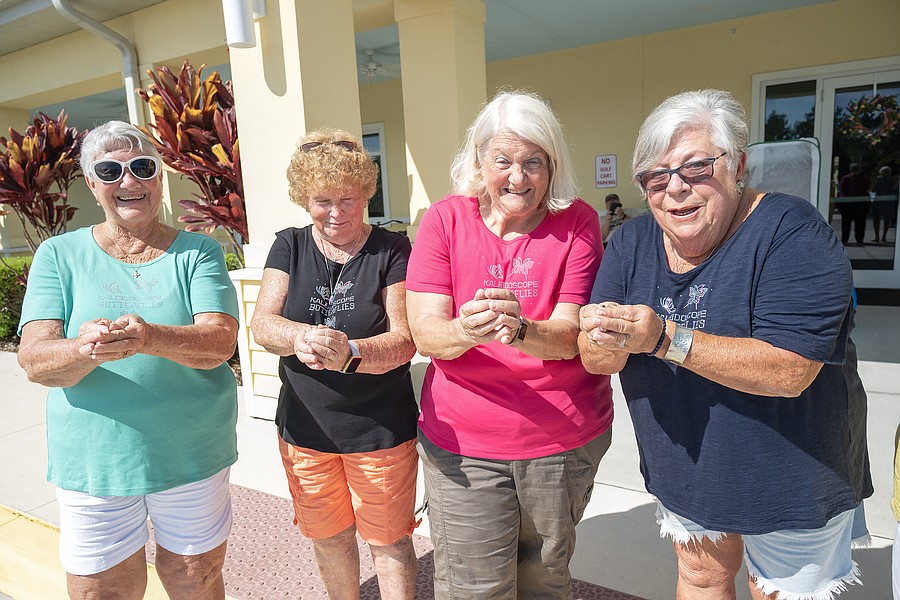
Kaleidoscope Butterflies members hold their monarchs before their release at the Plantation Oaks clubhouse in Ormond Beach. Photo by Michele Meyers
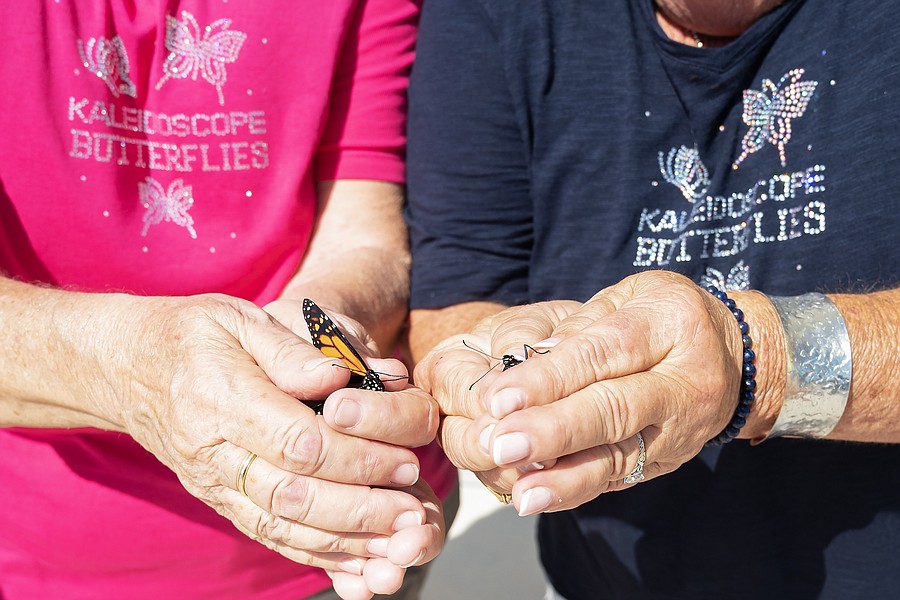
Kaleidoscope Butterflies members Diane Wieboldt (left) and Gail Schuck hold their monarchs before their release at the Plantation Oaks clubhouse in Ormond Beach. Photo by Michele Meyers
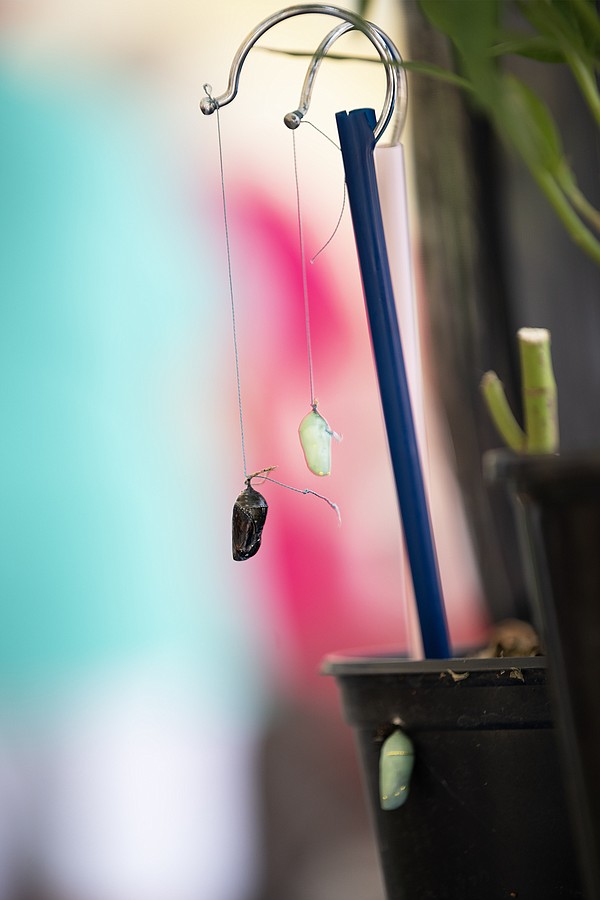
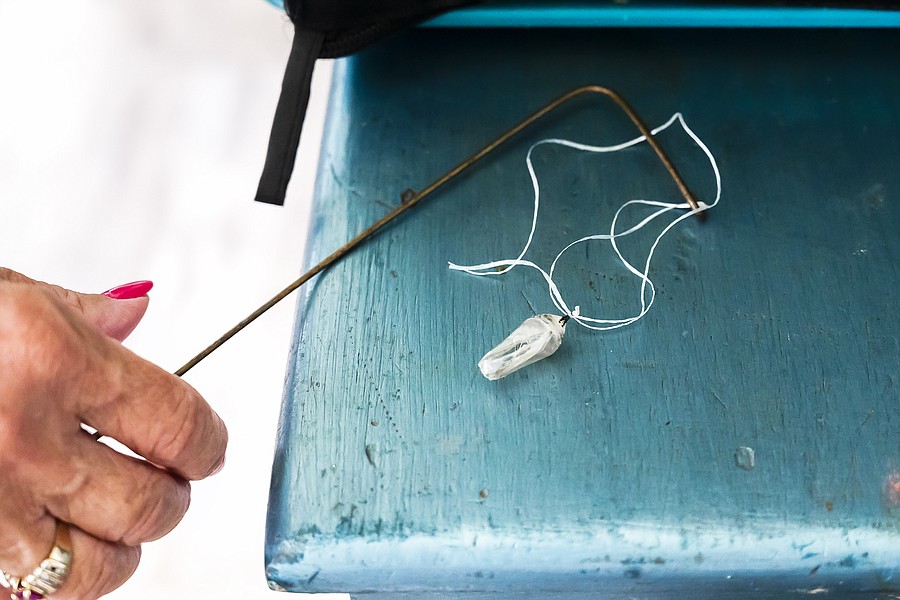
Empty chrysalis attached with floss. Sometimes it is necessary to move a chrysalis from an area that cannot support the growth of the pupa. The chrysalis is then reattached to the new location with floss. Photo by Michele Meyers
The Kaleidoscope Butterflies group release their monarch butterflies at the Plantation Oaks clubhouse in Ormond Beach. Photo by Michele Meyers
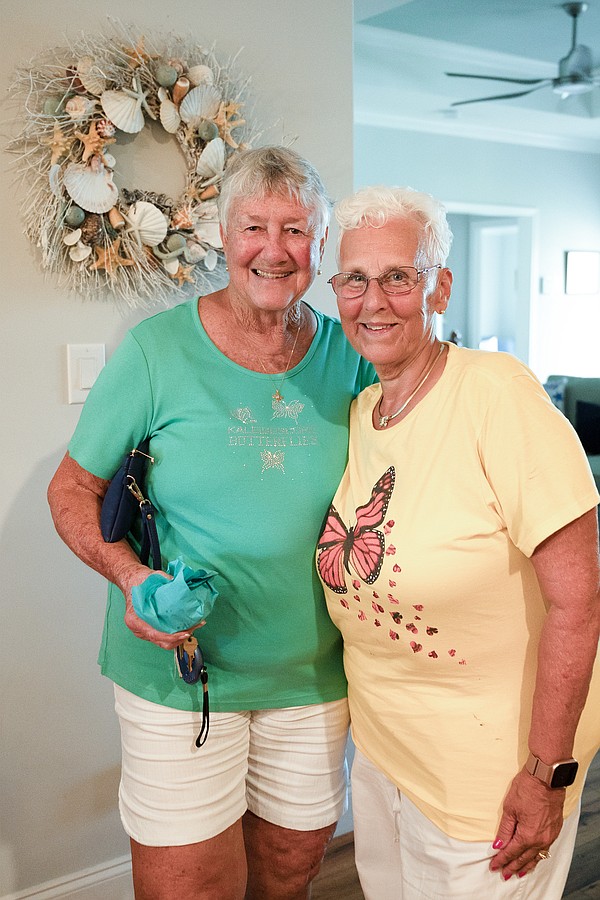
Kaleidoscope Butterflies members and best buddies--Jackie Hobbs and Sandra Swart. Photo by Michele Meyers
The Kaleidoscope Butterflies group release their monarch butterflies at the Plantation Oaks clubhouse in Ormond Beach. Photo by Michele Meyers
A monarch butterfly is ready to fly during Kaleidoscope Butterflies' release event at Plantation Oaks in Ormond Beach. Photo by Michele Meyers
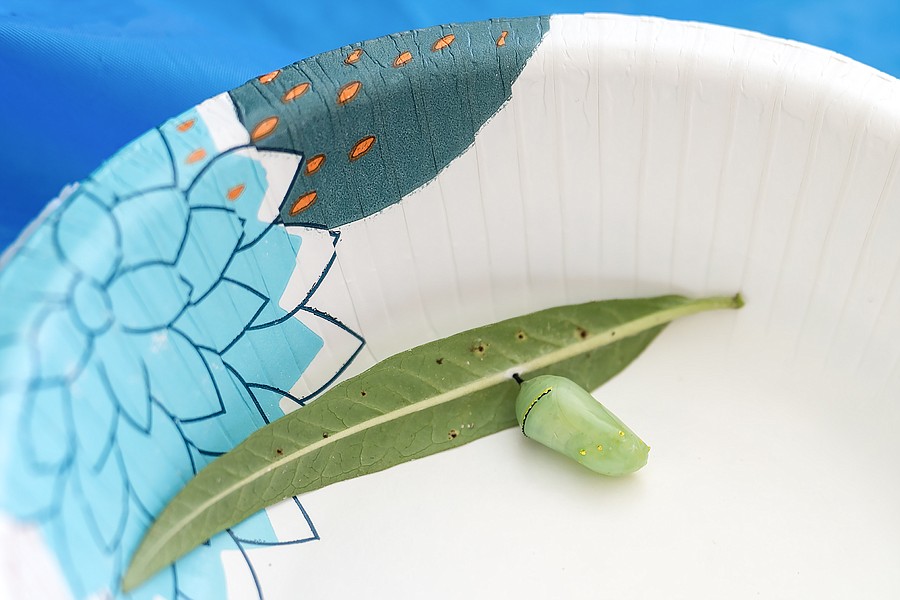
Monarch caterpillars attach themselves to a silk pad before pupation. A green chrysalis represents the first stage of the pupa. Photo by Michele Meyers
Monarch caterpillars have voracious appetites. They eat milkweed plants when they are in the larval stage before pupation. Photo by Michele Meyers
Five years ago, Colleen Anderson could not touch a caterpillar. She thought they were gross.
But her love of monarch butterflies has led her to found Kaleidoscope Butterflies, a Plantation Oaks-based group that raises, tags and releases monarchs. Kaleidoscope members held their most recent release at the Plantation Oaks clubhouse on Aug. 17.
“We would just love to get other people aware of how much help these beautiful creatures need to stick around,” Anderson said. “In a few generations, they’re only going to see pictures of monarchs in books. They are not going to see them flying around. They won’t know what that is. They will be gone.”
Monarch butterfly populations have declined by 85% because of climate change, urban development and pesticides that kill the milkweed plants on which they rely, according to the conservation nonprofit Center for Biological Diversity.
Migrating populations are less than half the size necessary to avoid extinction.
Anderson wants to bring awareness to the monarchs’ plight and teach people about the butterflies’ importance to the environment. As natural pollinators, butterflies sustain ecosystems, helping flowers and certain foods thrive.
We started out wanting to help the butterflies. I’m telling you, I think the butterflies are helping us more."
— Colleen Anderson, founder of Kaleidoscope Butterflies
Before she began raising butterflies, Anderson lived in Dade City, where she would visit her friend Pat Hendricks. Every time she went to Hendricks’ house, butterflies were fluttering to and fro.
“Finally, I asked what was happening over there, and she showed me her whole setup,” Anderson said. “She taught me how to do the same and took me to get my first milkweed plant that had caterpillars on it. I couldn’t touch a caterpillar. She had to come over every time I had to move a caterpillar. She helped me a lot.”
So Anderson joined Hendricks on her mission to help save the monarchs from extinction.
They recruited more people in their community and taught them how to set up an environment that would accommodate all stages of a monarch butterfly’s metamorphosis.
When Anderson moved to Plantation Oaks of Ormond Beach in December 2022, she was leery about posting her butterfly-saving aspirations online. Her husband thought people would think she was weird. But she introduced herself to the community on Facebook, writing that she enjoyed raising monarch butterflies. She added a date when she could teach people who were interested.
“All of a sudden, all of them responded with, ‘Yes, yes, I would love to do that,’ and that’s how we got started,” she said.
Raising monarch butterflies begins with buying pesticide-free milkweed plants. The butterflies lay their eggs on the bottom of the leaves. In three to four days, a caterpillar chews through the egg casing and begins eating the milkweed leaves.
After the butterflies emerge, Kaleidoscope members tag them for tracking purposes and release them outside.
Anderson said the tags are a circular white sticker, lighter than a butterfly’s wing. She encourages anyone who sees one to take a picture. The photos can be posted at monarchwatch.org, where butterfly enthusiasts, environmentalists and people who want help fight the monarch butterflies’ extinction can learn about the species.
Anderson is proud of her group’s contributions to saving the species and amazed at group members’ stories.
“We started out wanting to help the butterflies,” she said. “I’m telling you, I think the butterflies are helping us more.”
Member Diane Wieboldt’s husband Doug died almost two years ago. Raising monarch butterflies has been fun for her and her cat — a Russian blue who watches intently as the insects move around their habitat. She said her husband would have enjoyed the entire process.
“It’s such a positive thing in this negative world,” she said. “It’s been really good for me. I really enjoy it.”
Before Anderson arrived in the community, 81-year-old Gail Schuck had a butterfly tattooed on her ankle in California for her 70th birthday. She is thankful Anderson brought the monarchs to Plantation Oaks.
“She came into this neighborhood like a ball of fire,” Schuck said. “She was full of adventure and love and kindness. For me, it was one of the most inspirational feelings to watch that metamorphosis from the not-very-pretty caterpillar to the absolutely God-given beauty of the butterfly.”
Her butterflies Aurora and Angel emerged together. She named Aurora after her mother, who is deceased. She renamed Angel after her father, whose middle name is Angelo, when she discovered the monarch was male. Both butterflies visit her every day around 12:30. They are the only released butterflies that have returned to her.
“They just stay, and I talk to them,” she said. “Then they go back to heaven. They’re the only two that I’ve seen since I’ve been raising the butterflies. The come religiously, every day. Isn’t that so amazing?”
At the Aug. 17 release, Kaleidoscope members released all of Sandra Swart’s butterflies. Swart has become one of the most prolific monarch butterfly raisers in the group.
“Every morning, I sing to them, ‘Good morning to you, good morning to you,’ like I did with my kids, and they all start flapping their wings,” Swart said. “They walk all the way up to the top of the habitat. Sometimes they come back (after a release) and land on my shoulder.”