- March 18, 2026

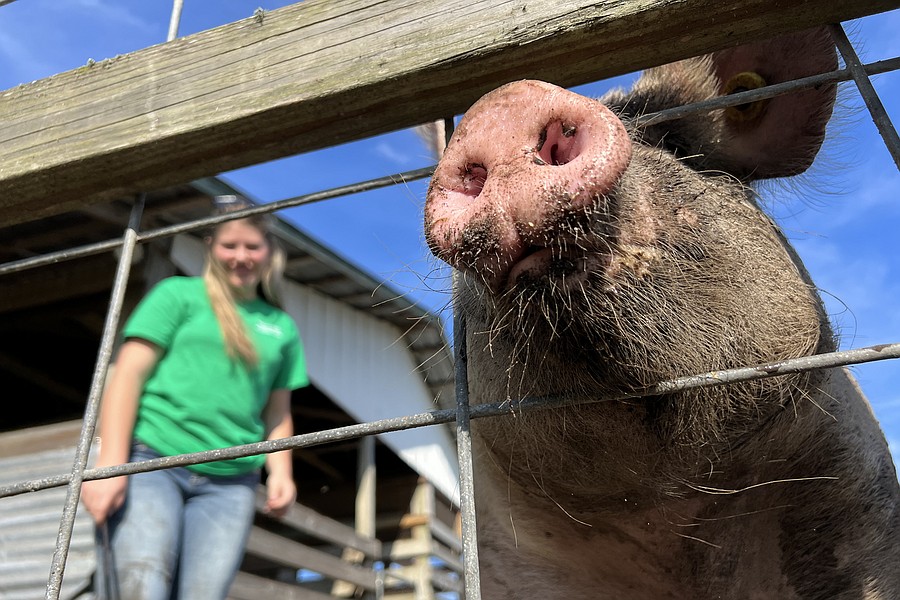
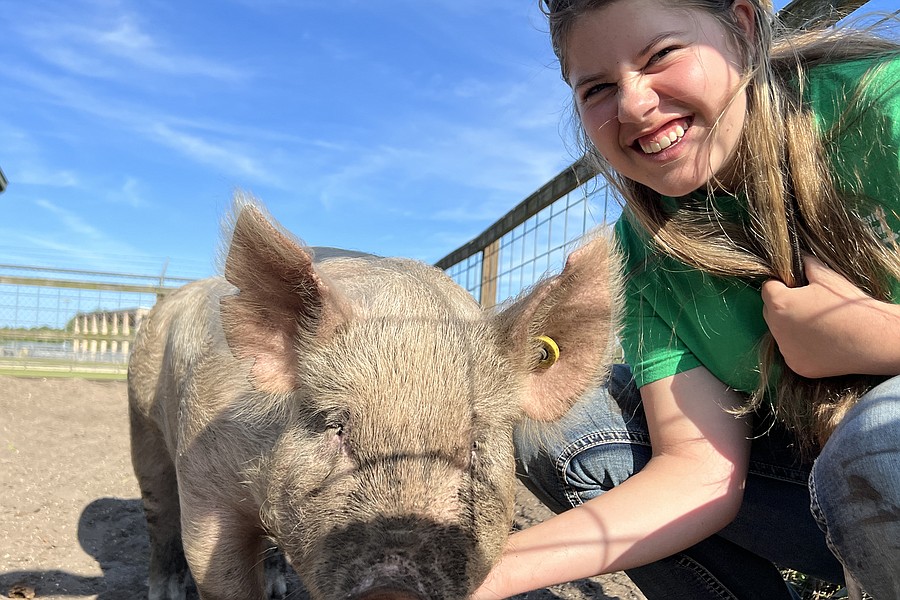
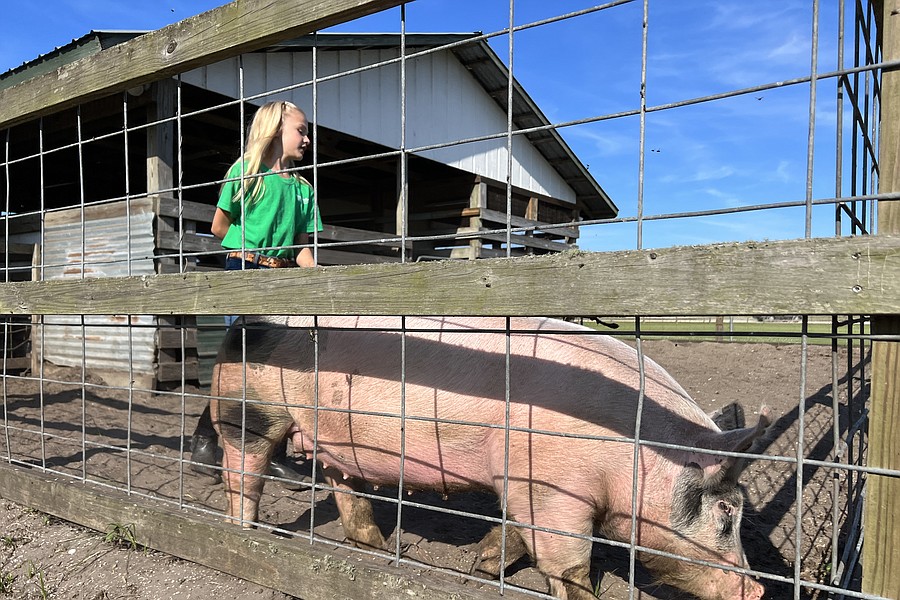
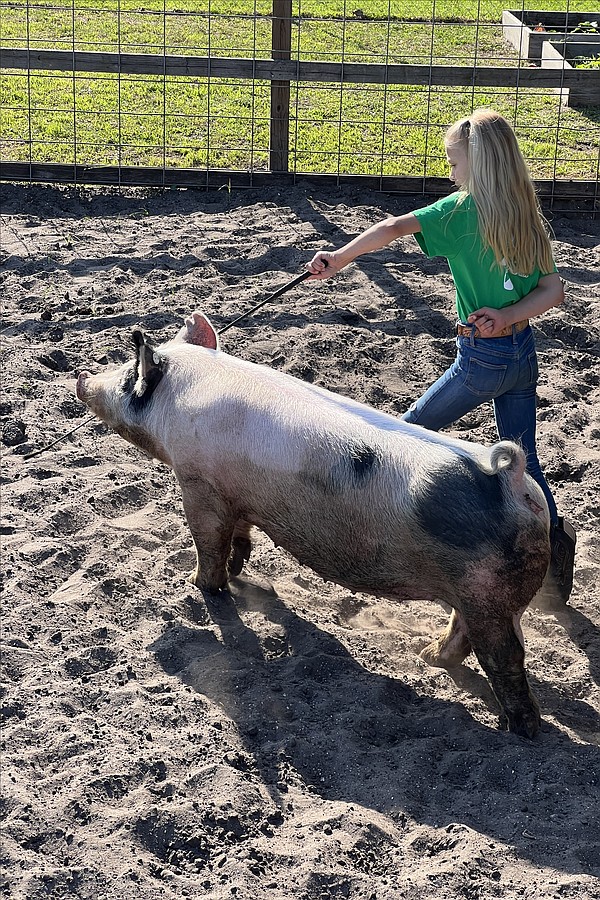
Ava Hatten's pig this year started at about 65 pounds and now weighs about 235.
Ava Hatten's father also raised animals, starting as a young teenager.
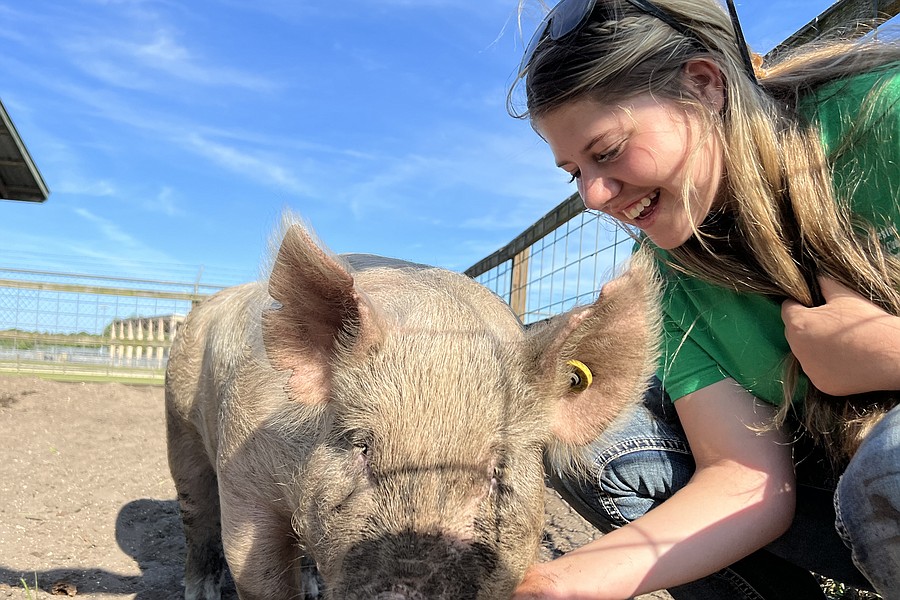
Ava Hatten has been in 4H for seven years; she is now in eighth grade at Buddy Taylor Middle School.
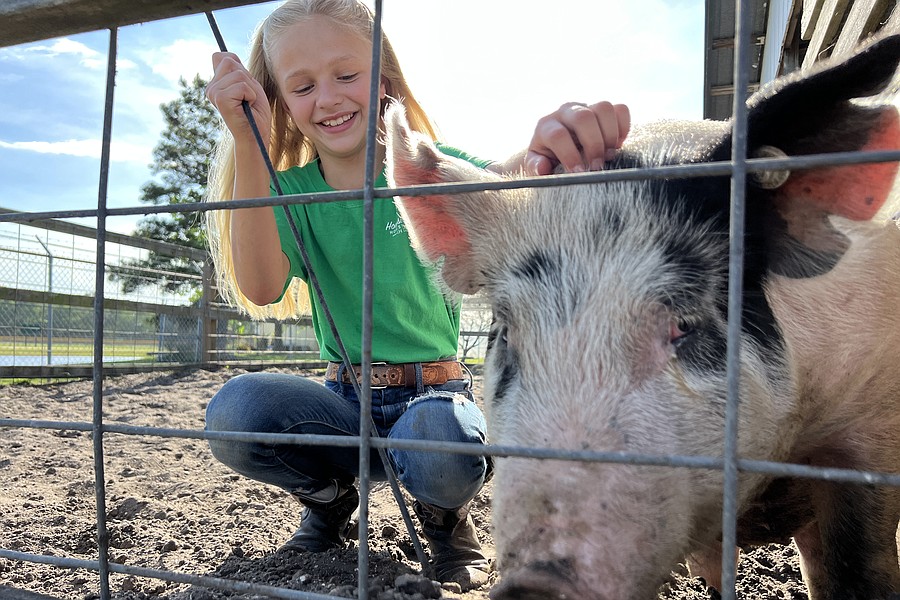
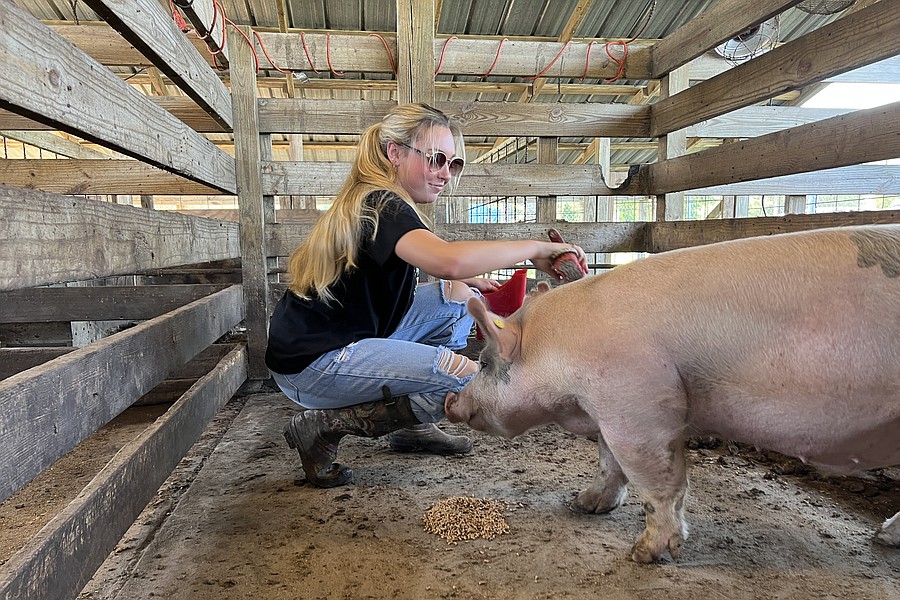
Ava Hatten feeds bananas to her pig as a reward for obedience.
Coralynn Soard washes her pig with Mane 'n Tail shampoo, the same brand she uses herself. But, her mother pointed, they buy a separate bottle for the big.
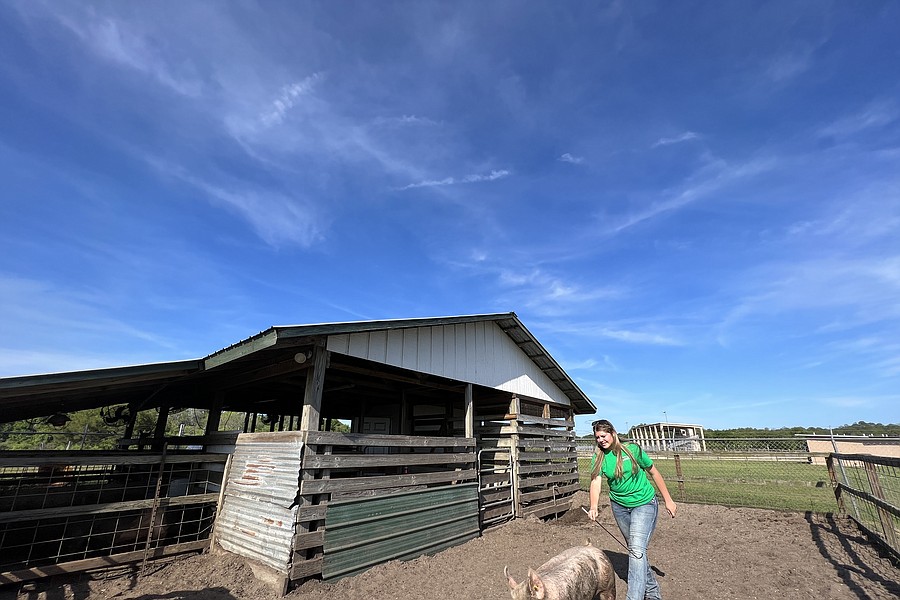
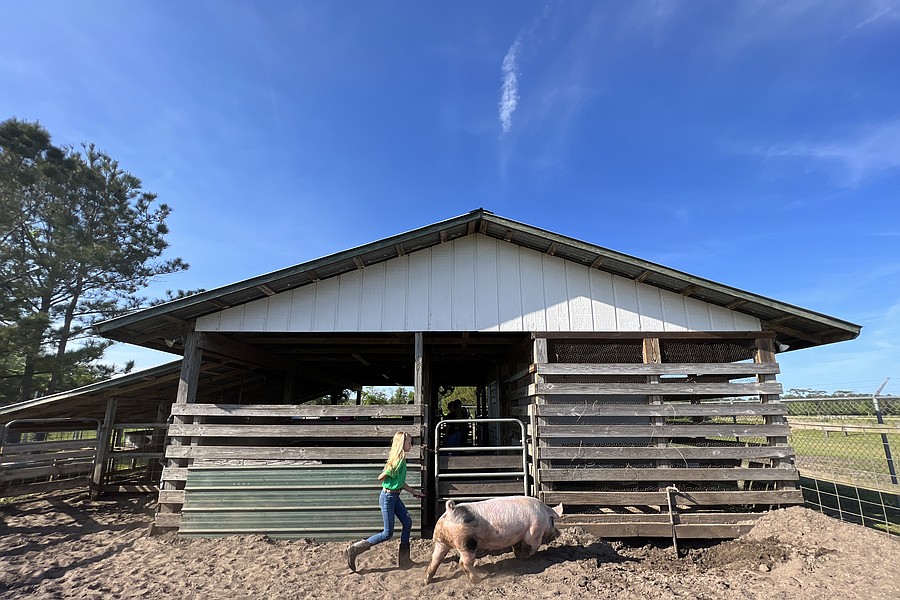
Multiple students, including Ava Hatten and Coraylnn Soard, keep their pigs on Sawgrass Road, in barns owned by FFA or 4H.
Coralynn Soard said she gives her pig marshmallows as a reward for obedience.
Coralynn Soard hasn't given a name to her pig. Soard's mother, Jade, said she often reminds Coralynn that the pig "is a project, not a pet." She gave the pig a good life, and one day it will give good meat to whoever buys it, Jade said.
Coralynn Soard has learned to never get mad at her pig. She often looks up expert tips on YouTube.
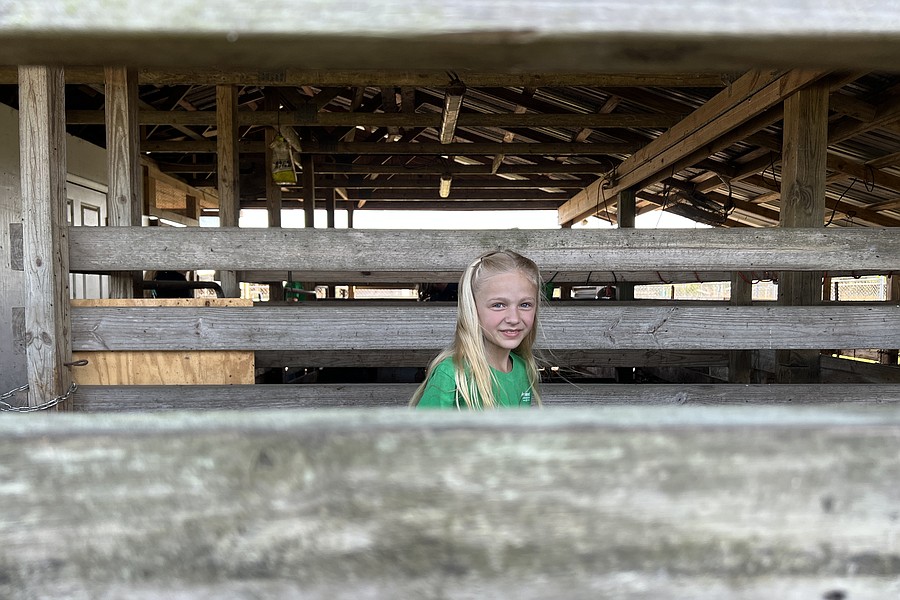
Coralynn Soard, a third grader, is raising a pig for the first time. She has previously raised chickens. Her mother, Jade, raised animals for the fair as a child as well; her father, Cory, played quarterback when attending FPC.
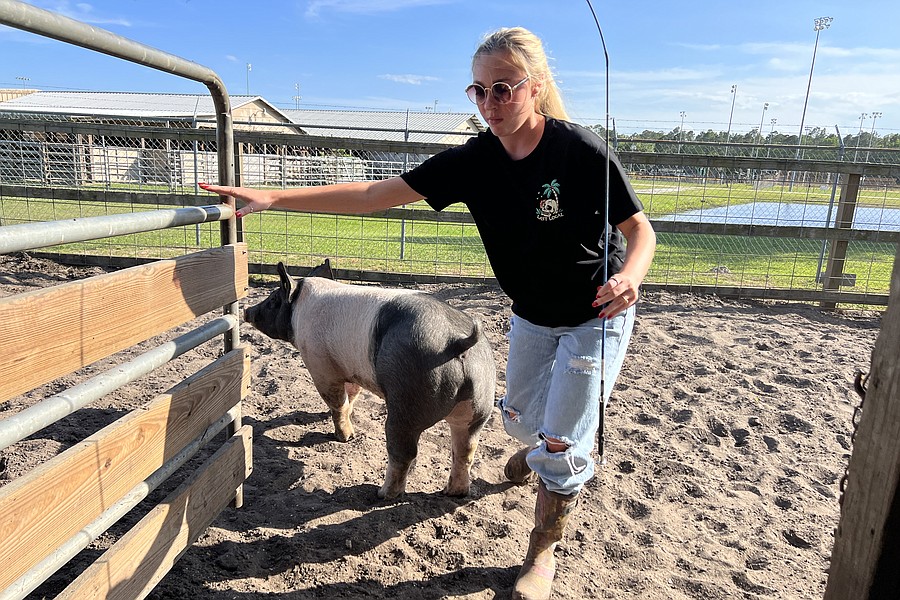
Kaitlyn Rose lets her pig out into the training pen, on Sawgrass Road, near the Flagler County Fairgrounds, on Thursday, April 6, a week before the pig show.
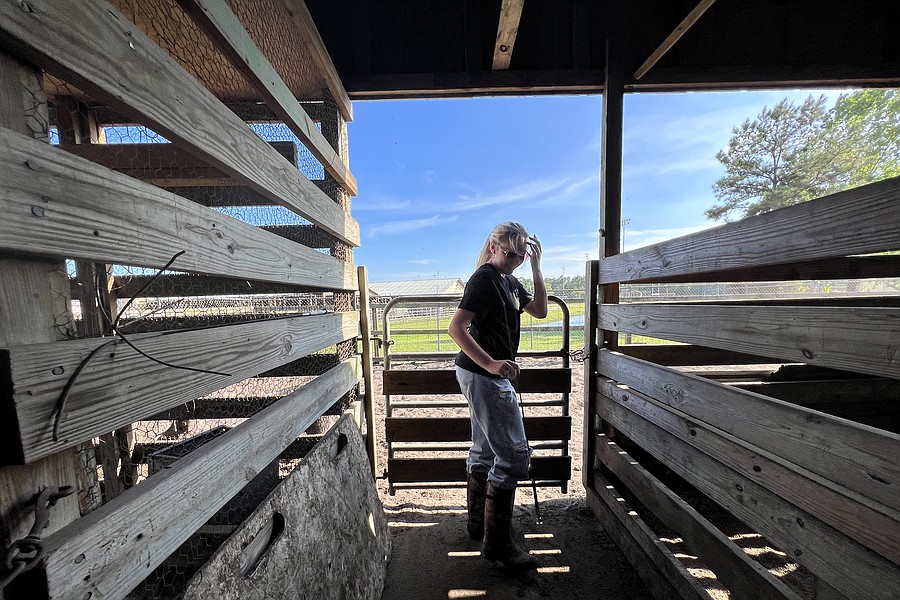
Kaitlyn Rose raises her pig at a barn on Sawgrass Road, where several other students also raise their pigs. Both FFA and 4H make barns available for students.
Kaitlyn Rose has raised pigs for five years, starting in eighth grade. She doesn't have land and had no background, but a friend got her interested, "so I took the plunge, and I haven't stopped since."
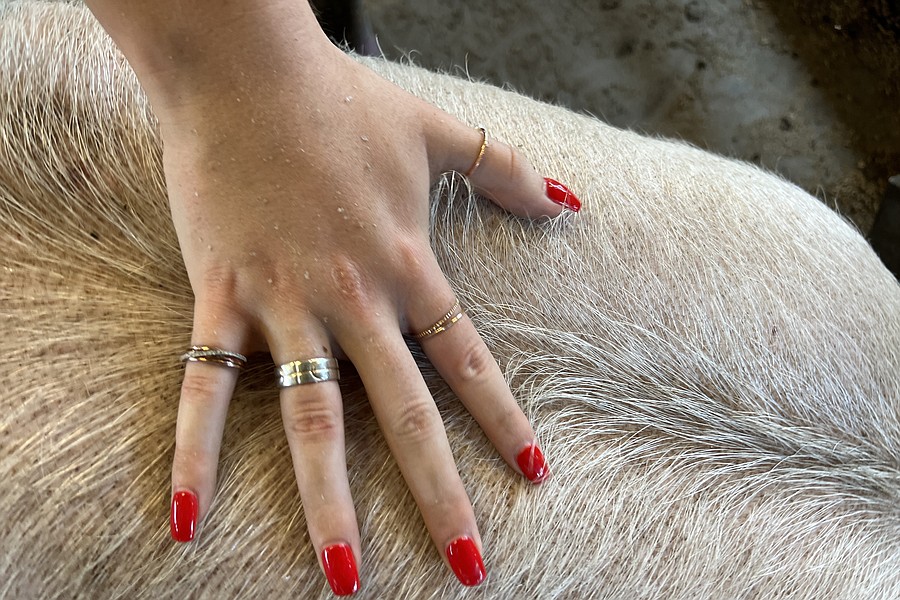
Kaitlyn Rose gives her pig a pat on the rump. Painted nails are not a requirement for raising pigs.
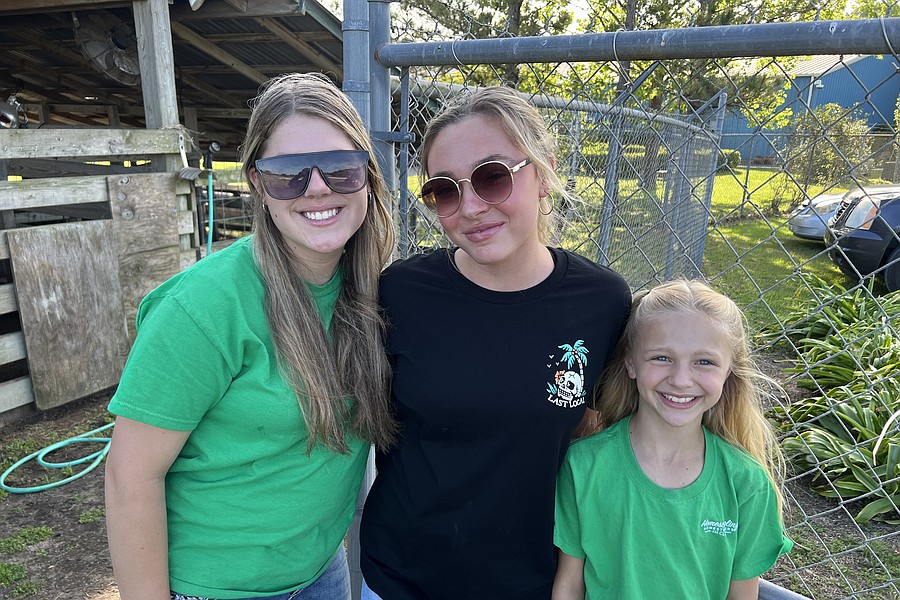
Ava Hatten, eighth grade, Buddy Taylor Middle School; Kaitlyn Rose, senior, Flagler Palm Coast High School; Coralynn Soard, third grade, home school. Photo by Brian McMillan
For most people, it’s easy to get mad at your pig.
“They’re very stubborn,” said Kaitlyn Rose, a senior at Flagler Palm Coast High School, who has been preparing for six months to show her pig Thursday, April 13, at the Flagler County Fair and Youth Show.
Ava Hatten, an eighth grader at Buddy Taylor Middle School, agreed, saying a lot of patience is needed “when you work your pig, and your pig doesn’t work.”
I asked a third student, Coralynn Soard, what was the most surprising thing about raising a pig — this is her first time — and she said, “How good she is.”
Why does Coralynn’s pig obey?
Coralynn said she watches YouTube videos, and she learned a valuable, if ironic, lesson from the experts: “Don’t get mad at your pig.”
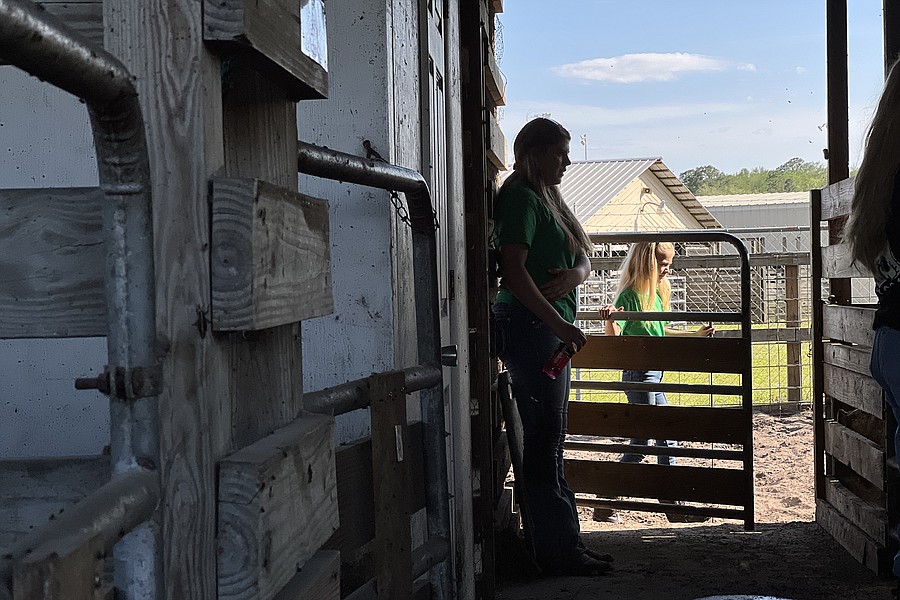
I met Kaitlyn, Ava and Coralynn recently at a pig barn on Sawgrass Road, near the Flagler County Fairgrounds. Flies swarmed the stinky pig pens, and everyone wore boots except for me. I won’t make that mistake again.
For more than 30 years, the Flagler County Fair and Youth Show Inc. has hosted a show and a livestock auction at the fairgrounds. Penny Buckles, the volunteer organization’s current president, first got involved when her youngest daughter showed an animal at age 12.
“Now she’s 36, and I’m still doing it,” Buckles said with a laugh, during a phone interview. She said her grandkids are now carrying on the tradition.
Most of the kids don’t get too attached to the animals, because they know the purpose of raising the animals.
“This is a business project,” Buckles said.
Coralynn's mother, Jade, concurred. She said she has talked with Coralynn many times, to make sure she doesn't get too attached to her pig, which will be taken to a slaughter house after the April 14 auction. She said Coralynn has learned well.
"She'll say, 'I don't name the pig, because it's a project, not a pet,'" said Jade Soard, who raised animals herself as a child. "She's given it a good life, and it will give good meat to whoever buys it. That's what we repeat to ourselves."
Whereas in years past, up to 120 have participated, this year, only 57 students are showing animals. That’s in part because of business realities: The cost of buying a 6-week-old pig for a student to raise has gone up from about $200 in recent years to about $350 this year. The cost of six months of feed has more than doubled, to $500 or $600. If the auction price of $2 or $3 per pound holds, that won’t be enough to cover the costs, so Buckles said she’s hoping for a good turnout and good prices for the students.
“It’s a passion,” Buckles said of her involvement in the program, adding that if we don’t keep teaching young people how to raise animals for people to eat, we won’t have beef and pork to eat in the future.
The show is open to members of two groups, Future Farmers of America, and 4H, both of which have barns for students to keep their animals, making it possible for city dwellers to participate.
Kaitlyn, Ava and Coralynn don’t know each other well, but they all know Buckles.
They all said Buckles is kind and will go out of her way to help them individually, even transporting their animals, or calling for a vet, if necessary.
“I love her,” Ava said.
Over the phone, Buckles responded to me: “I’m really strict, so that’s really sweet of them.”
As the time winds down till the show, all three of the young ladies continue to keep their pigs fed — and pampered. They even scrub the pigs with human shampoo.
Another tip that Coralynn learned on YouTube: Pigs like marshmallows.