- March 25, 2026

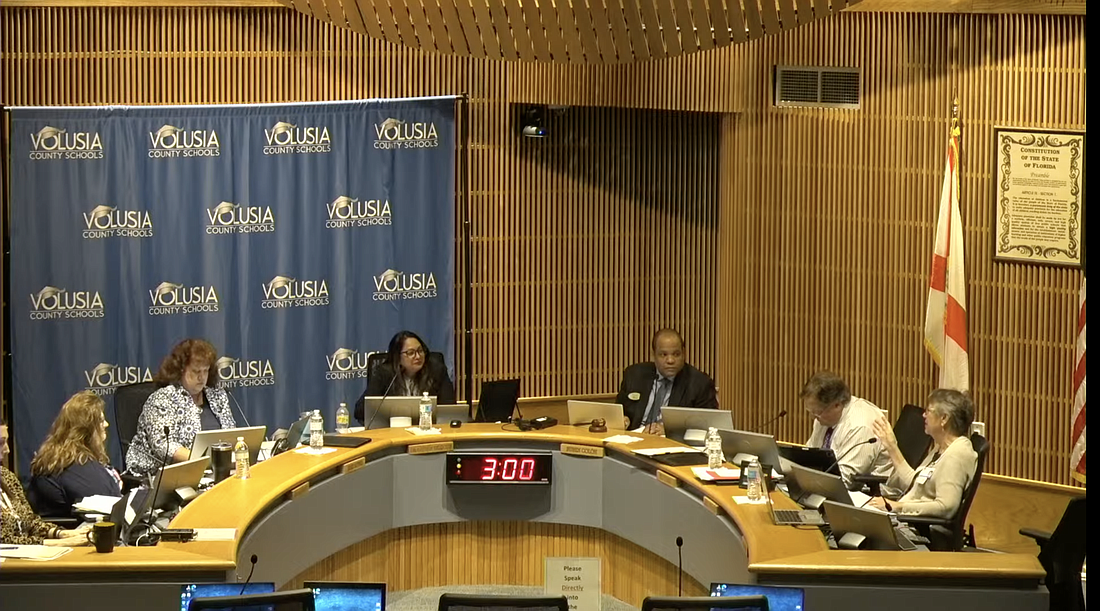
The Volusia County School Board decided on an instrument to evaluate its attorney during a workshop on Tuesday, July 26.
Though initially the board was going to evaluate School Board Attorney Ted Doran at its meeting later that afternoon, members opted to delay his evaluation for a meeting on Aug. 30, since the workshop took over two hours and there was little time in between the workshop and the meeting for the board to fill out the evaluation. School Board member Carl Persis was also absent during the workshop.
The School Board has not evaluated its attorney for 40 years. School Board Chair Ruben Colon said that the board had a policy in place first adopted in 1974 and last updated in 2003 stating that the retention of the school board attorney should be placed on the agenda at the first meeting in July each year, along with any considerations of additional contract amendments.
"That is a practice that clearly was not happening," Colon said. "And so that is the reason why we're discussing a tool. This is not about Mr. Doran."
At the board's meeting on June 28, the board voted to pursue an evaluation tool for Doran, to be made up of similar criteria used in school board attorney evaluations from different Florida counties. The end result was an evaluation instrument composed of five different sections, each with several goals.
The tool's evaluation scope was narrowed as board members consolidated some criteria and eliminated others during the workshop. School Board member Linda Cuthbert repeatedly said outlined goals were "redundant" and initially wanted to remove the entire section based on professionalism.
"When I read this, I said, 'No decent attorney is going to agree to this because it's almost as if he doesn't behave himself or herself, then out that person goes,'" Cuthbert said. "It doesn't matter about the legal advice, it's how the person treats us and whether or not that attorney kisses our ring, and I don't think that's appropriate. We don't treat our employees that way."
Some of the goals outlined in the professionalism category that were retained include "conducts all work in a professional, ethical, effective and dignified manner;" "demonstrates ability to work well with individuals and groups;" "effectively uses language in dealing with the board;" "speaks well in front of all groups, expressing ideas in a forthright manner with appropriate decorum" and "models trust, competency and integrity when acting in a professional capacity as the board's attorney."
The evaluation instrument also asks the board to judge the attorney's relationship with the board, knowledge of School Board laws and policies, communication skills and organization.
Cuthbert worried that some of the criteria were not straightforward and instead, subject to interpretation. Colon said that Doran's goal is to provide a better service to the board, and that at the end of the day, like others who get evaluated, he will strive for a better evaluation year after year.
"An evaluation is subjective, no matter how you look at it," Colon said. "So that's what we're doing."