- March 20, 2026

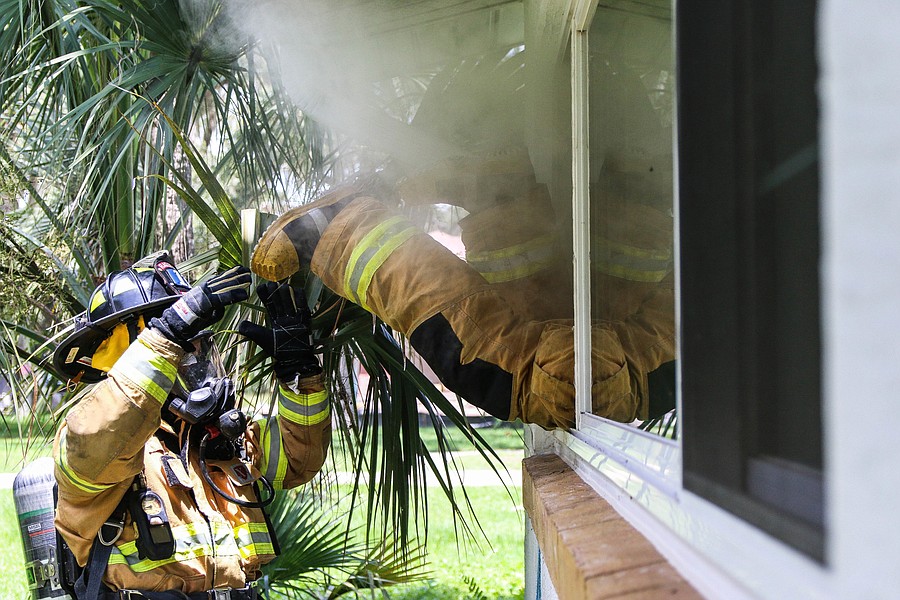
Flagler County Fire Rescue's Noah Hunt helps county firefighter Jimmy Melady into the bedroom of the training house, as the scenario is a 2 a.m. house fire where victims would most likely be in the bedroom. Photo by Paige Wilson
Flagler County Fire Rescue Lt. Armando Castaneda said visibility inside the Flagler Beach home they filled with smoke on Aug. 2 is barely at arm's length. Photo by Paige Wilson
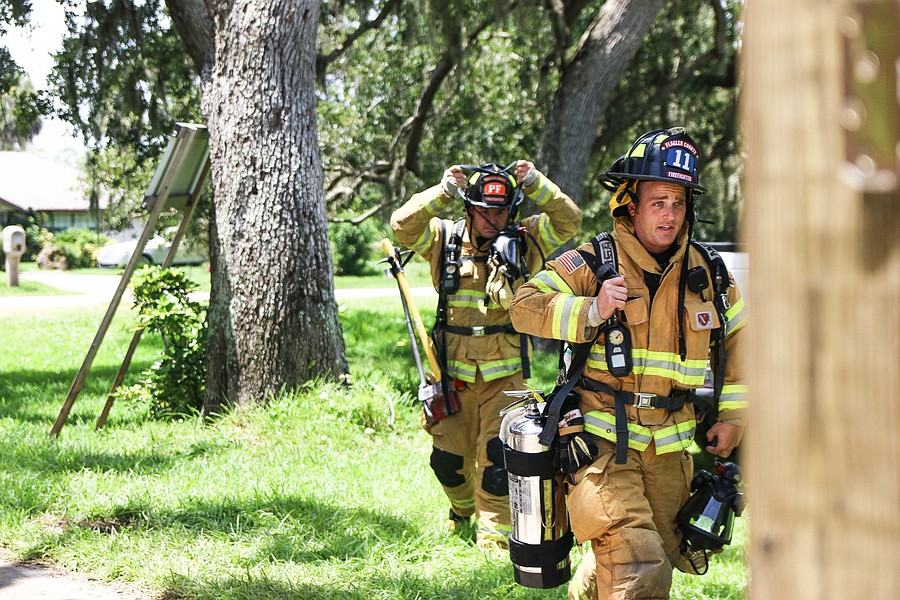
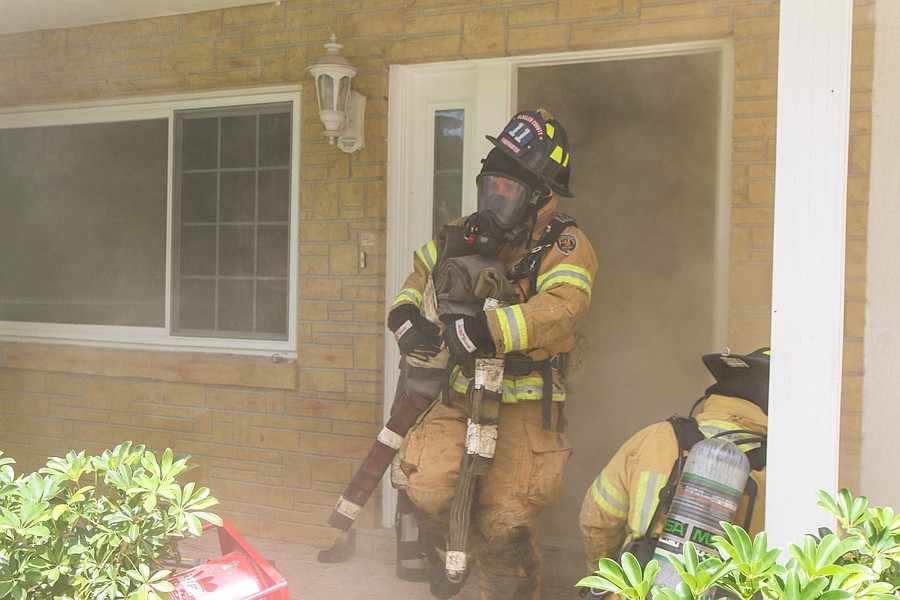
Flagler County Fire Rescue firefighters Jimmy Melady and Noah Hunt arrive on scene of the training, suited up to immediately determine the best entry into the smoking house. Photo by Paige Wilson
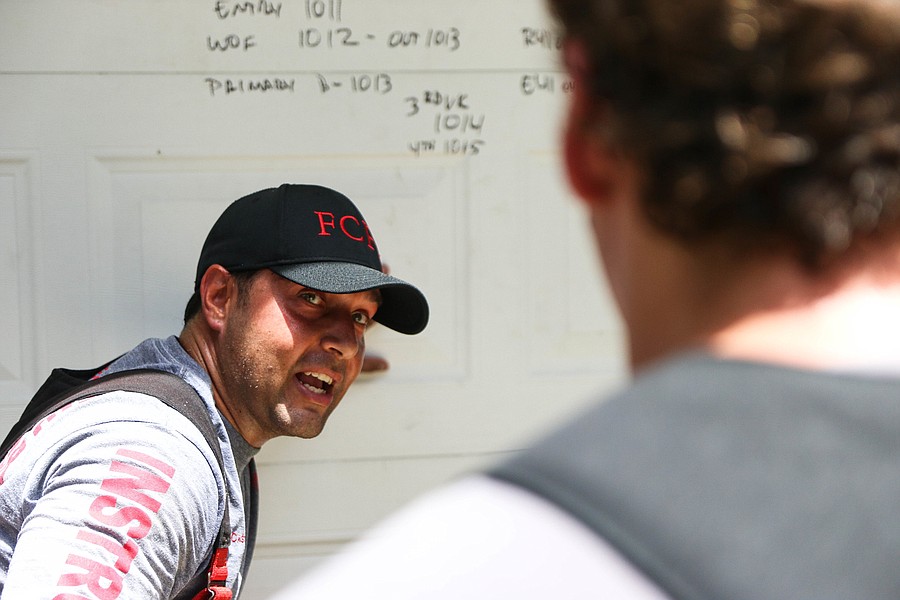
Flagler County Fire Rescue Lt. Armando Castaneda debriefs the Flagler Beach ladder 11 crew and Flagler County Fire Rescue 11 crew after training. Photo by Paige Wilson
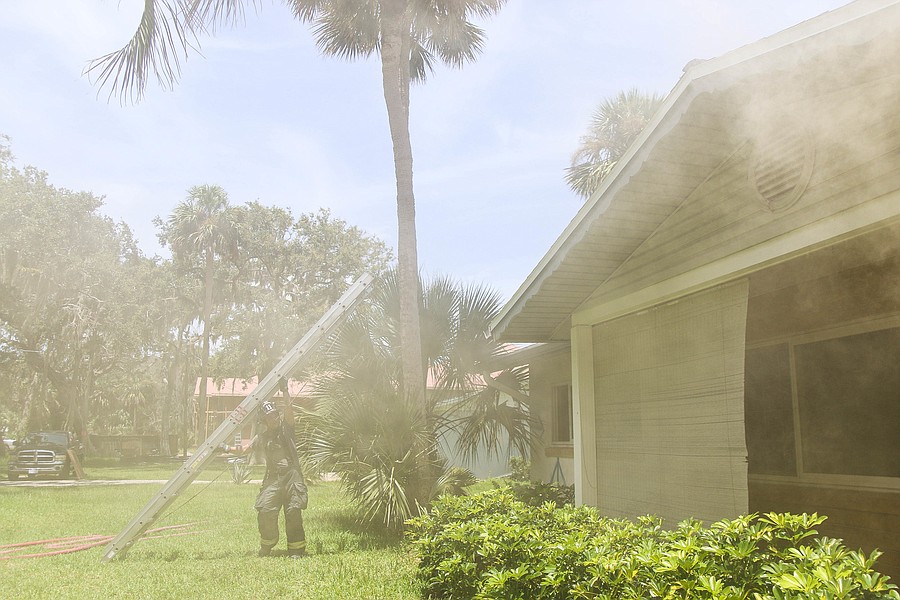
Timothy Conroy, with the Flagler Beach Fire Department, carries a ladder over to the roof of the training home while smoke clouds the air. Photo by Paige Wilson
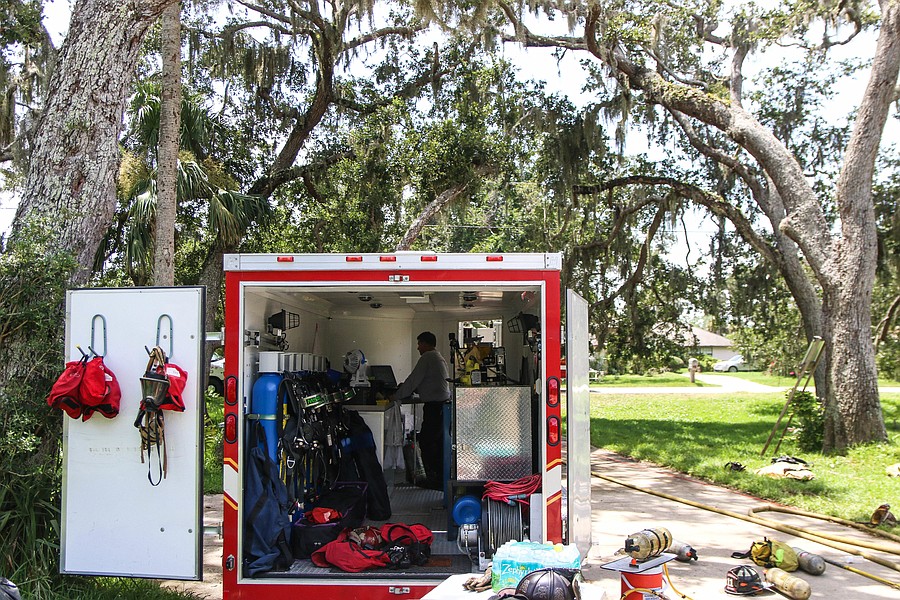
Flagler County Fire Rescue Training Chief Lenny Ensalaco works from a rescue supply unit outside the home donated for training in Flagler Beach. Photo by Paige Wilson
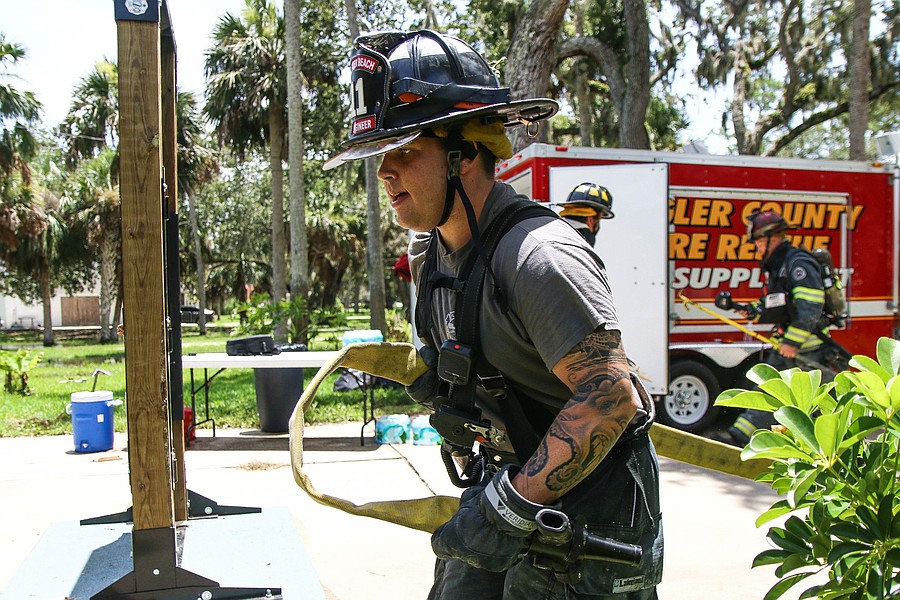
Flagler Beach Fire Department firefighter Timothy Conroy runs inside the training home with a hose. Photo by Paige Wilson
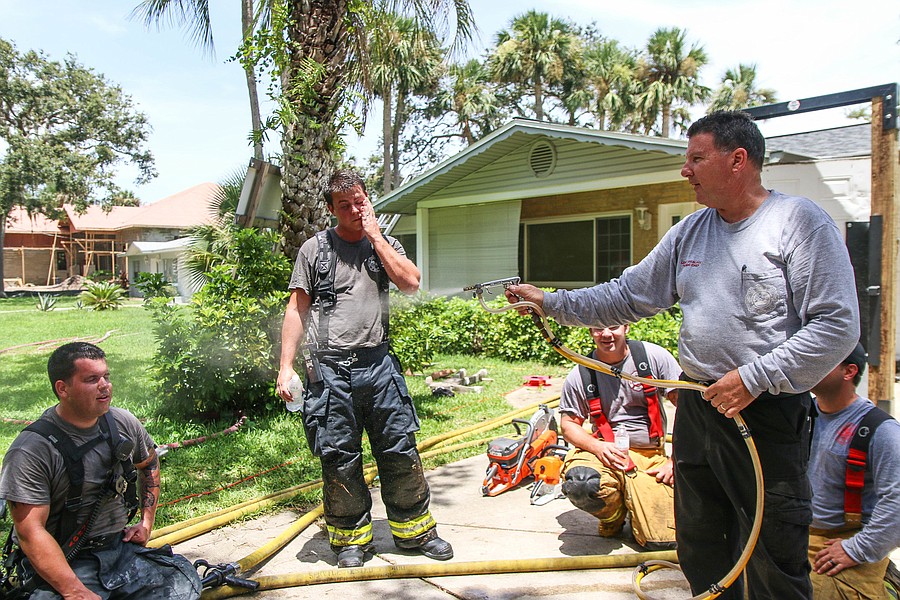
Flagler County Fire Rescue Training Chief Lenny Ensalaco sprays water at Timothy Conroy, of the Flagler Beach Fire Department, to cool him down after training. Photo by Paige Wilson
Flagler County Fire Rescue's Noah Hunt carries out one of five prop victims the team must rescue from the training house. Photo by Paige Wilson
Flagler Beach resident Daryl Harris decided to have his Flagler Beach home on Lambert Avenue demolished, as Hurricanes Irma and Matthew left waist-deep water damage. But to put the house to good use before it’s torn down, Harris donated it to the Flagler County Fire Rescue and Flagler Beach Fire Department for training.
“It’s for a good cause,” Harris said, adding that he might have a second home to donate in the foreseeable future.
It’s been almost two years since the county department has been given a real-life home to conduct crucial training, said Flagler County Fire Rescue Lt. Armando Castaneda.
“We have a training facility, we have a tower, but there’s only so much we can rearrange,” Castaneda said. “It’s been great. All the crews have left really happy. … When you get a house like this, it’s not a cookie-cutter Palm Coast home. It’s terribly confusing inside.”
For three days in early August, about 80 firefighters from the city of Flagler Beach and the county, participated in a training scenario of responding to a house fire at 2 a.m. where they must find and save five prop victims. The rescue crews were completely unaware of the situation or layout of the house until they arrive and enter it themselves.
“For this drill, we have forcibly entry, a primary search and something called vent enter search, and that’s when we have certain limitations where we can’t get into a house, but there are confined rooms with a high probability of victims that we go to,” Flagler Beach Fire Rescue Cpt. Stephen Cox said. “So that’s what we use vent enter search for. And primary search, we have the crews go through the actual house.”
Cox and Castaneda worked to repurpose a 55-gallon metal drum with wood, coals and wet hay smoldering inside to cause a thick smoke to fog the training house, creating a tangible, but not flame-based environment for the firefighters.
“For me, it always comes down to stress,” Castaneda said. “If you know a building, you know a building and it’s easy for our crews to get a false sense of confidence because they get proficient at searching somewhere they’re already familiar with. When you introduce heat stress and fatigue, confusion becomes an issue. So, rather than let people sink to a level of training that isn’t best for the victims, train them up so that when they do resort to what happens to people when they get confused and tired and hot, then they fall back on skills as opposed to being familiar with the building.”
For each training session, the first rescue crew decided what way they wanted to enter the home, whether that was by breaking down a prop door or venturing in through the bedroom window. A second crew arrived on scene four to five minutes later, representing real-life response time, to help rescue the victims.
“I tell people when we do classes all the time, ‘There’s no allusion of going inside and being a hero. Going inside is where people get dead, right?’ And I don’t want to get dead, so I want people to search as efficiently as possible and go where they expect the most danger to the victim,” Castaneda said.