- April 8, 2026


To balance the general fund budget, the county will have to raise taxes or cut services.
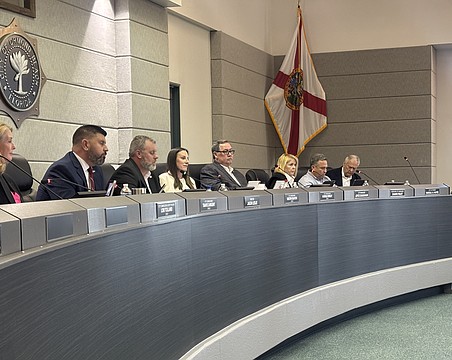
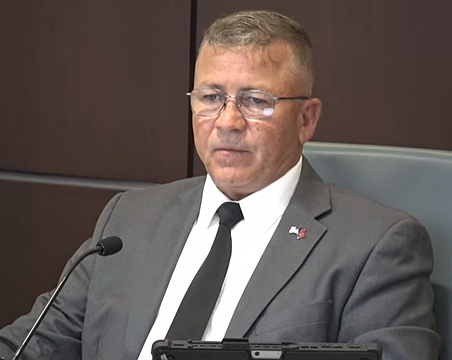
Years of budget-slashing and reserve-spending have caught up to the county, County Administrator Craig Coffey said at the Flagler County Board of County Commissioners’ Monday, June 11, workshop.
Starting his presentation with reassurance that Flagler County is not “in crisis mode,” Coffey made it clear that the general fund has reached a fork in the road. So much has been reduced in recent years, he said — staff has been cut, raises have been frozen, work has been privatized — that the services remaining must either be decreased or revenues will need to rise in order to afford them.
Raising revenues could mean increasing millage, cutting capital projects, spending reserves or establishing new franchise fees.
“We’re not in dire straits,” Coffey said of the $50.5 million projected to be collected in reserves next fiscal year. “(But) we have to make adjustments.”
“Adjustments,” “tough decisions,” and “proactive” were words heard often at the workshop. To bridge an estimated operational budget gap of more than $3 million, Coffey said, extra funds will need to start coming in, or fewer dollars will need to be spent.
“We’re operational,” he said, “(but) there’s a cost for the quality of life we want in our county.”
By law, Coffey must submit a final budget by July 15.
Some of the possible service reductions the board considered include grounding emergency services’ FireFlight helicopter, closing the Bunnell library and further reducing staff. But none of the commissioners supported any of those options.
Coffey identified seven to 10 staff positions for possible layoff, keeping a net of $240,000 in-house. But, after so much belt-tightening, he said, “every position I lose hurts.”
“Every time you take a person out, your level of service is going to be affected,” he said. “We’ve made all the efficiencies we can. All the service cuts you’re looking at here are ugly.”
Grounding FireFlight, for example, was an “ugly” option. Parking the chopper in a hangar would save about $575,000 but, as Commission Chairwoman Barbara Revels said, “that helicopter has saved so many people’s property.”
The board could even forgo replacing an old fire truck, Coffey suggested, which would save $435,000. But next year, commissioners would again be faced with the same purchase item, possibly in addition to other expensive emergency equipment.
Another $200,000 could be saved by pulling funding to outside agencies, like the United Way, drug-treatment and battered-women organizations. But those funds are looked at as investment, according to Commissioner Milissa Holland. Fewer dollars that go into anti-drug programs, for instance, usually mean more spent in law enforcement.
“There are not easy cuts out there,” Coffey said. “I recommend you don’t cut anything else from these departments.”
“We can cut, cut, cut — we can do that,” Commissioner Nate McLaughlin added. “But the question is: Is that the kind of business we want to be? That’s the philosophical question.”
With big-ticket reductions off the table, the commission considered revenue-raising outlets.
“No one likes to pay taxes,” Commissioner Alan Peterson said. “But folks understand that taxing is our only revenue.”
McLaughlin agreed.
“You can only kick the can down the road so long,” he said. “At some point, you’ve got to do just a little bit more than mow the grass.”
After cutting $130,000 of capital projects from next year’s work roster (nixing items like a library expansion and gazebo rehab), the board still cited $3 million needed to balance the 2012-2013 general fund.
At its next workshop, June 19, commissioners hope to agree on a revenue plan.
Increasing the millage rate by .5, Coffey said, would raise about $3 million. For residents with homes assessed at $150,000, he said, that would mean paying about an extra $75 annually.
“You will still have one of the lowest millages in the state,” he said.
“This is a deficit that’s going to happen every (year) if we do nothing,” McLaughlin added.
The next half-cent sales tax meeting is scheduled for July 2.