- April 7, 2026

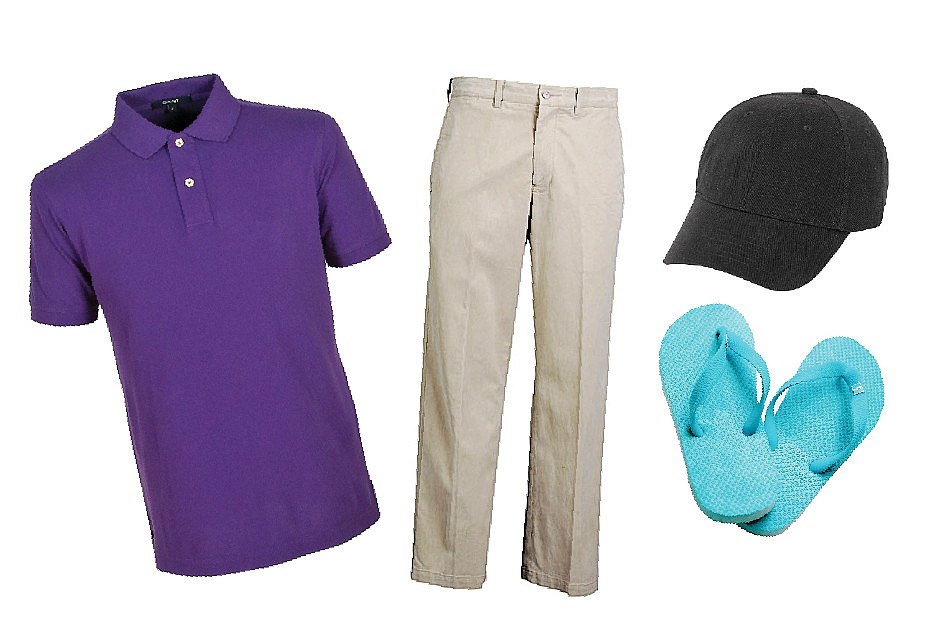
The proposed policy calls for collars, recommends tucked-in shirts and, in high schools, allows flip-flops.
Following the Flagler County School Board’s Jan. 25 workshop to outline its new uniforms policy, a disciplinary committee, led by Special Projects Coordinator Katrina Townsend, got to work on a code of conduct and enforcement plan.
Although specifics on the plan — such as whether infractions would be dealt with through a three-strike policy, for instance — are still pending, Superintendent Janet Valentine is confident Townsend and her team will come up with a plan that is both comprehensive and fair.
On the issue of medical/religious conflicts, Valentine cited exemptions for each, contingent upon notes from a doctor or religious leader. She also addressed concerns about special-needs students, such as Nick Cooper, a sixth-grader at Rymfire Elementary with Tourette’s syndrome and ADHD (See www.PalmCoast Observer.com for that story).
Cooper’s mother, Diane, worries that, because of Nick’s low tolerance for certain fabrics, uniforms might cause him to have “meltdowns” in school. An exemption, she added, might only make him stand out more.
But Valentine believes the policy is open enough to allow for variation.
“I think there are going to be clothes that are similar in nature that individuals can choose if there is a physical reason that they cannot wear that uniform,” she said.
Included in the current draft policy are blue or black jeans, blue, black or khaki slacks and four colors of collared shirts.
Modeling the plan after neighboring districts, Valentine also does not envision code infractions resulting in missed class time.
“We do not want to see students out of class as a consequence,” she said. “Sometimes it may be necessary, but I think the discipline committee will come up with other alternatives.”
Alternatives could include Saturday school or after-school detention. Another possibility would be to nab code-breakers first thing in the morning, then lend them uniforms from on-campus closets, stocked by the School Advisory Council, private donations, The S.T.U.F.F. BUS and student donations.
“Once you’re in it about a year, it gets easier,” she said, citing possible incentives for end-of-the-year uniform donations, such as extra graduation tickets or parties for elementary classes.
The current policy, to be advertised Feb. 7 and approved with possible revisions in March, is as follows:
Pants
• Must be khaki, navy blue or black slacks, or blue or black denim. May include pants, walking shorts, skirts, skorts or jumpers.
• A small trademark — about the size of the Polo logo — will be acceptable.
• Pants must be plain, without holes or frays, with finished hems.
• Must be worn securely at the waist.
• In all grades excluding levels K-3, a black or brown belt is required with all pants with belt loops.
Shirts
• Appropriately sized polo-style, oxford or button-up dress shirts with collars are mandatory.
• Small trademarks are acceptable.
• Shirts must be solid colors.
• Students at every school may wear the district colors of white or gray, and two additional colors, as chosen by principals.
• On designated spirit days/special events, students may wear school T-shirts, team jerseys or club shirts.
• It is recommended that shirts be tucked in. (“I don’t think tucking-in is a battle I want to fight on this,” Board member Andy Dance said.)
• Cleavage must be covered.
Outer/cool-weather attire
• Zip, button-up and over-the-head sweatshirts/sweaters are acceptable, as long as required attire is worn beneath.
• All outerwear must be solid white, gray or other approved school colors.
• Small trademarks are allowed.
• School logos are allowed.
Shoes
• Grades K-6 must wear athletic/enclosed shoes only.
• Grades 7 to 8, can wear closed-heel/strapped shoes, as well as sneakers.
• Grades 9 to 12 can wear all of the above, with the addition of flip-flops/sandals (“We do live in a beach community,” Valentine said.)
• Unsafe footwear is not allowed (e.g., sneakers with wheels).
General rules
• Shorts, skirts, skorts or jumpers are acceptable, if they fall within four inches above the knee.
• No headgear of any kind is allowed.
• No undergarments are to be seen at any time.
• Apparel to identify affiliation with any gang or secret society is not permissible.
• Sunglasses are not allowed inside.
• Chains hanging outside of clothing are not allowed.
• No jewelry or accessory that presents safety/health concerns is permissible.
• Tattoos deemed inappropriate by staff are not allowed.
• Contact lenses that alter the appearance of the eye are not allowed.
• No trench coats.
• The requirement that school IDs be worn at all times is yet to be determined.
HERITAGE RETURNS?
Nicole Richards, principal of Heritage Academy, the charter facility the School Board voted to close Jan. 17, has notified the office of Superintendent Janet Valentine its intention to appeal the board’s ruling. School Board Attorney Kristy Gavin will notify the board, at its Feb. 7 meeting, of the school’s plans and options.
By law, Heritage Academy has the right to appeal to a state administrative judge or bring the issue back before the Flagler County School Board.
Through the appeal, the academy would attempt to show that, although as a campus it received an F grade two straight years, its elementary performance was more accomplished, according to Valentine.
Five years into the school’s charter, it redesignated itself as a K-12, instead of splitting performance measures into separate grade levels.
“Perhaps they would revise their charter to include just an elementary,” Valentine said.