- April 9, 2026

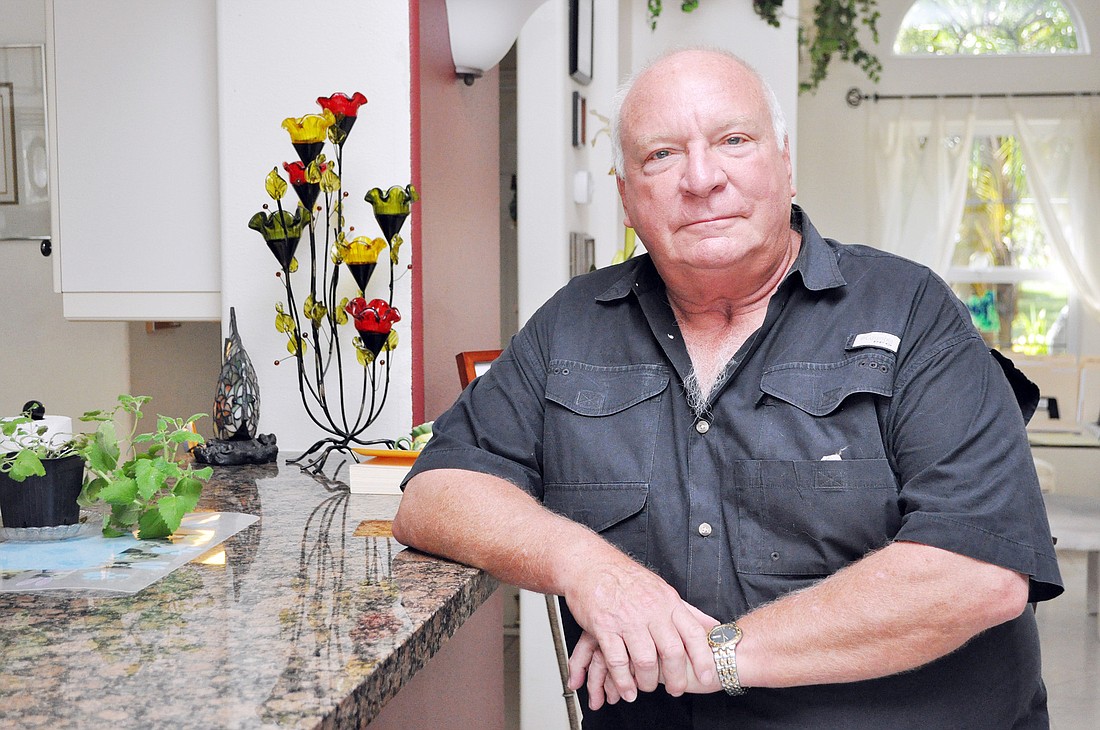
Jon Netts, a city government veteran of 22 years and Palm Coast mayoral incumbent, knows jiu-jitsu.
He took a class on it once and decided to hone his skills, he says, until he became the sensei, going on to lead women’s self-defense lessons.
He shrugs.
This is the same man who earned a master’s degree in biology, played Princeton football and was a volunteer paramedic for 35 years.
Weekends as a kid, he built hydroplane racing boats out of wood and fiberglass. After “retirement,” he built a flooring company from scratch into the biggest in St. Augustine.
He has conducted 500 weddings, he estimates, and claims never to have used the same ceremony twice.
This is the man who jumped into politics on a whim, because his friends asked him to, and has gone on to build a quarter of his life around it.
“I’m the kind of person who, if you do things, you do them wholeheartedly,” he says. It’s a tendency hammered into him by his parents, the two school teachers who always demanded more than the status quo and told him, “Don’t dabble.”
Netts compares politics to chess. The actions you take now, he says, have consequences down the road. What will they be? What are the risks versus rewards? What pawns do you sacrifice to save your king?
“I like the intellectual challenge of what I’m doing,” he says. “That’s something my parents drilled into me from the very earliest ... You’ve got to stay active.”
That’s why he says he’ll never fully retire. Even if he loses the upcoming race, he’ll just re-join Habitat for Humanity. He’ll become a Flagler volunteer. He’ll do something.
“(Otherwise) where’s the challenge?” he asks.
Netts is involved in a half-dozen regional entities that help him see bigger picture.
“What’s happening now, in this region, is you’re starting to see a shift … from local government to much more regional activities,” he says. “You’ve got to be part of a bigger region.”
He moves magazines on the table, to illustrate a point about mixed-use communities.
“(Palm Coast) was the first city I saw potentially starting from scratch,” Netts says, a simple explanation for why he broke a promise to his wife to be done with politics, after they boarded their boat and moved in the early 1990s to Florida, from New Jersey, where he served 12 years on a city council.
Palm Coast was new and impressionable. During its incorporation, how could he just sit and watch?
He calls the original city architects “visionaries.” They set forth a path, he says.
“What we do today effects that vision,” he says, pointing to the Palm Coast mission statement framed behind glass on a wall in his office.
The first time he visited Florida, when he was about 40, he says he couldn’t stand it. He thought it was “boring,” and “tacky.”
Then he came again, to visit a friend. He found himself on a street in Palm Coast, surrounded by a canopy of trees. After he retired, there was no other place he wanted to move.
“It is so important that you know (what’s) out there,” he says. “Part of the job of any elected official is to try to understand balance … The difference between fat and bacon depends on who’s doing the slicing.”
Netts hopes residents like his way of slicing.
JON NETTS Q&A
NAME: Jon Netts
AGE: 69
FAMILY: wife, Priscilla; no children
CAREER: classroom teacher, education administrator
POLITICAL EXPERIENCE: Eight years on planning board and 12 years as a city council member/president, in New Jersey; 1.5 years on the code enforcement board, in Palm Coast; Palm Coast City Council 2001 to 2007; Palm Coast mayor 2007 to present
QUIRKY FACT: His boat is called the Thistle Dew, as in, “I wanted a 50-footer, but this’ll do.”
What is your stance on City Hall?
At some time in the future, there will be a City Hall, and it will almost undoubtedly be ... in Town Center. The decision whether or not to construct a City Hall has to be one of fiscal responsibility.
We’re paying $240,000 a year in rent … People tell me we shouldn’t build a City Hall, and I ask them one question: “Do you own your house, or do you rent?” They say they own. Why would that be any different for the city? Do you want 20 years of rent receipts, or do you want a building in which you have equity? ... The economy is going to improve. That’s the history of this nation … Ownership makes sense.
Then you have the unintended consequences. We have been described as the magnet for City Marketplace. The city went there, and the businesses came. There is probably some truth to that. The long-term economic viability of this city centers to a great extent in Town Center. If you talk to various planners across the nation, they will tell you that a sustainable community has somewhere between 10% and 20% as an industrial component to its tax base. Palm Coast has about 1%. So if you want all these municipal services, and you don’t want high taxes, the secret is to get somebody else to pay for it. And that somebody else is retail, commercial and industrial. That’s what Town Center is designed to generate. If and when a City Hall is built there, if in fact it’s a magnet, it will tend to do the very thing that Town Center was designed to do, and that’s enhance our economic viability. But, to come back to the issue, you’ve got to convince me first, and the voters second, that it makes economic sense.
Some feel the city and county duplicate fire and/or emergency services. What is the best course of action?
The best course of action is to eliminate the overlapping EMS …
The Palm Coast fire budget is $7 million. Say we close it down. Palm Coast saves $7 million per year. You take those firefighters, and you put them over into the county (fire department) ...
But if you’re going to have five firehouses open, and if you’re going to meet the (national) standard of three firefighters on an engine, then you need three firefighters per shift per firehouse, and you need administrators and so forth. And you’re going to add all that to the county payroll. The county payroll just went up as far as ours went down. But it’s still the taxpayers who are footing the bill.
Then, you’re left with five firehouses that the taxpayers of Palm Coast paid for. Do you give them away? ... Then, the fire trucks: another asset. Do we just give them away? Then, if you’re a county commissioner, you have to distribute that asset equally over the county. You can’t justify this higher level of service for Palm Coast and not provide the same level of service to the Mondex. So I’m going to redistribute it. That means reduction of service to Palm Coast …
EMS is a totally different animal ... The county gets to bill for transport services. We do not share in that revenue … Where we can eliminate overlap and duplication is in EMS.
What specific items would you cut from this year’s budget, if anything?
I’m not willing to cut fire service; I’m not willing to cut police service. Code enforcement is vital to the maintenance of our community. And if you think roads and drainage isn’t an issue, come answer my phone. So you’re not going to make big cuts there.
If you wipe out all (the smaller funds), you wouldn’t save a million dollars … I think that, without doing damage to the community, we’ve made the cuts that are available.
What votes or actions are you most proud of in your term as mayor?
Four years ago, when I ran for mayor, I said Palm Coast needs to be more environmentally sensitive. What brought us here was the environment. I’m extraordinarily proud of the fact that we’re one of 11 cities in the state of Florida to have a gold certification for environmental stewardship. And of the 11, we’re the highest scoring of the whole bunch. It’s a corporate culture.
I think influencing the decision for the two big DRIs, Neoga Lakes and Old Brick Township, to treat the two as one, so that you have a unified structure, and also to link them and force them to be a mixed-use community (was a success) ... Short term, you don’t see it. But one thing that sets me apart from the other candidates is a mixture of vision and understanding the law of unintended consequences. What you do today significantly affects what happens 10 years from now. Will you and I see the payback next year? No. But the residents over the years will see a payback.
How would your experience as mayor help you in a second term?
We had an issue when the hospital came to us to rezone its property. Part of the request was to put an electronic billboard up ... Would it have been politically nice to allow it for the hospital? Maybe, maybe not, but it’s the long-term consequences (that are overlooked) …
If you allow that kind of signage there, you’re going to allow it for Walgreens and ABC Liquor and for Walmart. What you do for one, you do for all. Is that our vision for Palm Coast? ... We don’t want to look like International Speedway ...
Being able to serve for 12 years in New Jersey, and 10 years here, gives historical perspective to see how decisions you make can have long-term effects. I don’t think there’s any substitute for that experience.
The fact that I have served 10 years in Palm Coast has allowed me to become involved in other areas (e.g., the Florida Inland Navigation District, the Northeast Florida Regional Council). I’ve been able to create a presence and allow the voice of Palm Coast and Flagler County to be heard … There are decisions occurring at the regional level, and it is so vitally important that we be part of that decision making process ... It’s a lot easier to change policy as it’s being written than after.
What should be the city’s role in improving the local economy?
I think the answer is evident. Our Business Assistance Center is one of the best things we’ve done.
I am convinced, and I’ve been told by experts in this area, that the answer is not industrial recruitment. We are probably not going to get a 100,000-square-foot building with 500 employees here. You’ve got tons of that in Volusia County, and you’ve got more than tons of that in Duvall County. What in the world would make you think you’d get that here? And if you got it here, what would that do to the community?
... You’ve got businesses here ... You ask, “If you’re in business, what can we do to help you stay in business?” And second, “What can we do to help you grow?” Your smaller businesses don’t have an overwhelming impact on the nature of the community, but in aggregate, that’s where your job creation is and job retention is. Yes, we have this extraordinarily high unemployment, but 40% of the unemployed never worked in Flagler County. They worked in Volusia County, Putnam County, Duvall County. So to that extent, we are a bedroom community. And we are not going to be able to create enough new jobs to cover that 40%. Where we need to be working more diligently is with our neighboring counties. Because when those jobs reappear there, those people will be eligible for those jobs.
This is not a problem that Palm Coast is going to solve as an island unto itself. This is a regional problem: 40% of them never worked here in the first place …
Putting your focus on that large-scale industrial recruitment, in my mind, is not the best way to proceed. We need to be growing local businesses, retaining local businesses.