- October 14, 2026


Lyn Lafferty, whose family owns property where the proposed Project Butterfly landfill would be built, said her family understands the concerns surrounding the controversial project because they initially had many of the same questions.
But Lafferty said learning more about modern landfills, the regulatory process and what she was told is a need for additional solid-waste capacity in the area changed the family’s view.
“We've gone through extensive due diligence, and as a result of that due diligence, our family feels that we can move forward in support of the project,” Lafferty said.
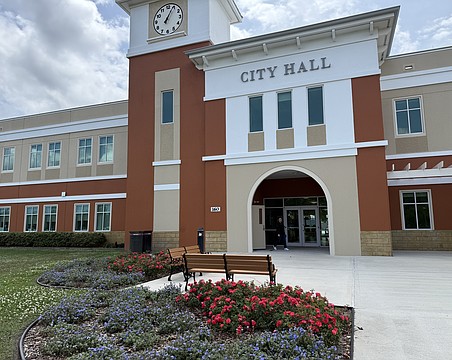
Her comments come as opposition to the proposed Class I landfill continues to spill into Bunnell City Commission meetings. Residents who oppose the project again attended the commission's Sept. 28 meeting, which was a regularly scheduled City Commission meeting at Bunnell City Hall.
The Bunnell Planning, Zoning and Appeals Board approved a special exception for Project Butterfly 3-1 on Sept. 1.
Seven years on Bunnell planning board
Lafferty served on Bunnell's Planning, Zoning and Appeals Board for seven years. She was not present for the Sept. 1 hearing on Project Butterfly and did not vote on the special exception.
She recently stepped down from the board.
“I've served the city for seven years now, and it's the right time for me to move on from that and for someone else to step up and serve the city,” Lafferty said.
Asked whether Project Butterfly played a role in her decision, Lafferty said she made the decision herself but acknowledged that the controversy surrounding the project was a factor.
“I'm proud of the years that I've served on the board,” she said. “Public discussion surrounding, you know, improprieties, I don't think that those are fair.”
Lafferty said she had thought for several years that it might be time to leave the board but had not done so until recently.
'Agriculture matters tremendously to us’
Project Butterfly is proposed for approximately 610 acres west of Bunnell. The property has been in Lafferty's family for more than 100 years, she said.
Agriculture has become one of the central points of disagreement surrounding the project.
Flagler County Commission Chair Leann Pennington, whose district includes western Flagler County, said the county will continue to oppose development it believes threatens farms and the area's rural character.
“There is something deeply un-American about allowing decisions that could put hardworking farmers out of business, threaten their land and livelihoods, and slowly erase the rural communities that helped build this county,” Pennington said. “Our farms, open spaces, and rural heritage are not obstacles to progress, they are part of who we are. Flagler County will continue fighting to protect our residents, our farmers, and the rural character of western Flagler County.”
Lafferty said her family is also part of Flagler County's agricultural community.
“We love our community. Our family has been here for over 120 years, and agriculture matters tremendously to us because we are agricultural landowners and farmers ourselves,” Lafferty said. “So we have no interest in creating a project that makes it impossible for our neighbors to continue farming.”
She said she expects her family to remain involved in agriculture for generations.
Lafferty says family's view changed after research
Lafferty said what she once pictured when hearing the word “landfill” was different from what she learned about a modern permitted facility.
She pointed to oversight from the Florida Department of Environmental Protection and other state and federal agencies as one of the reasons her family became comfortable supporting the proposal.
“What I pictured when I first heard the word landfill is very different from what I learned about a modern permitted facility,” Lafferty said. “These are heavily regulated facilities.”
She said the regulatory oversight extends beyond what local government alone can provide.
Lafferty said some of the concerns voiced by residents are similar to questions her own family asked when the project was first presented to them.
“The difference is that now we've had the opportunity to spend a considerable amount of time with people who design and permit and operate facilities like this,” she said.
That process, she said, gave the family time to learn about the regulatory process and safeguards involved with a modern landfill.
“That education has changed our understanding considerably,” Lafferty said.
‘An enormous responsibility’
For Lafferty, the decision to support Project Butterfly also comes down to what happens to her family's land in future generations.
“Our family has been blessed with thousands of acres of land,” she said. “And with that land comes an enormous responsibility to figure out how to carry that land into future generations.”
Earlier in the interview, Lafferty put that goal another way.
“We want for our future generations to inherit land, not just inherit stories about the land that our family once owned,” she said.
For now, Project Butterfly remains the subject of appeals and continued public debate, with the proposed landfill increasingly placing two arguments about western Flagler County's future against one another: opponents who say protecting farms and rural land requires stopping the project, and a landowning family that says the project can coexist with agriculture while helping preserve its remaining land for future generations.