- October 5, 2026

The Palm Coast City Council is moving toward banning direct potable reuse — sometimes referred to as “toilet-to-tap” — from the city’s drinking water system.
The proposed ordinance was discussed during the council’s Sept. 8 workshop. The measure would amend Chapter 49 of the city’s Code of Ordinances to explicitly prohibit direct potable reuse, commonly referred to as DPR.
The ordinance defines DPR as delivering advanced treated water from an advanced treatment facility to a drinking water treatment facility or directly into the potable water distribution system without an environmental buffer. Under the ordinance, the city utility would be prohibited from constructing, operating or funding infrastructure designed for DPR.
The ordinance would not prevent Palm Coast from continuing to reuse treated wastewater for non-potable purposes. Reclaimed water meeting Florida Department of Environmental Protection standards could continue to be used for landscape irrigation, agriculture, commercial cooling and industrial processes, provided there is no direct physical connection to the city's drinking water system.
Utility Director Brian Roche told the council Palm Coast uses about 10 million gallons of water per day and said the city is fortunate that 99% “goes to reclaimed water,” emphasizing that non-potable reuse remains a major part of the city's approach.
“That’s really the focus of the non-potable reuse,” Roche said.
The ordinance states that the city plans to continue using reclaimed water for non-potable purposes, including landscape irrigation and zero liquid discharge, while also pursuing brackish groundwater as an alternative water supply source. It cites drinking water quality, source reliability and public confidence among the reasons for prohibiting direct potable reuse.
Council Member David Sullivan said the proposal was straightforward because Palm Coast is not currently planning to implement direct potable reuse.
“There’s no plan to do this right now,” Sullivan said. “And so I think we’re just kind of institutionalizing that point.”
Council Member Ty Miller also stressed that the ordinance is not being proposed in response to an existing city plan to introduce advanced treated wastewater into the drinking water system.
“There has never been any plan necessarily to do that or look at that, nor does Palm Coast do this in any way now,” Miller said. “And this is just kind of further protecting that.”
Miller said putting the prohibition into city code would prevent DPR from becoming a future option unless the city changed the ordinance.
“It’s not available in the future unless someone had to rewrite this, essentially,” Miller said.
Sullivan said the ordinance would also ensure the City Council remains involved if the city ever considers changing course.
“It just tosses the ball back,” Sullivan said. “Make sure the City Council would have to be involved with anything that would change that.”
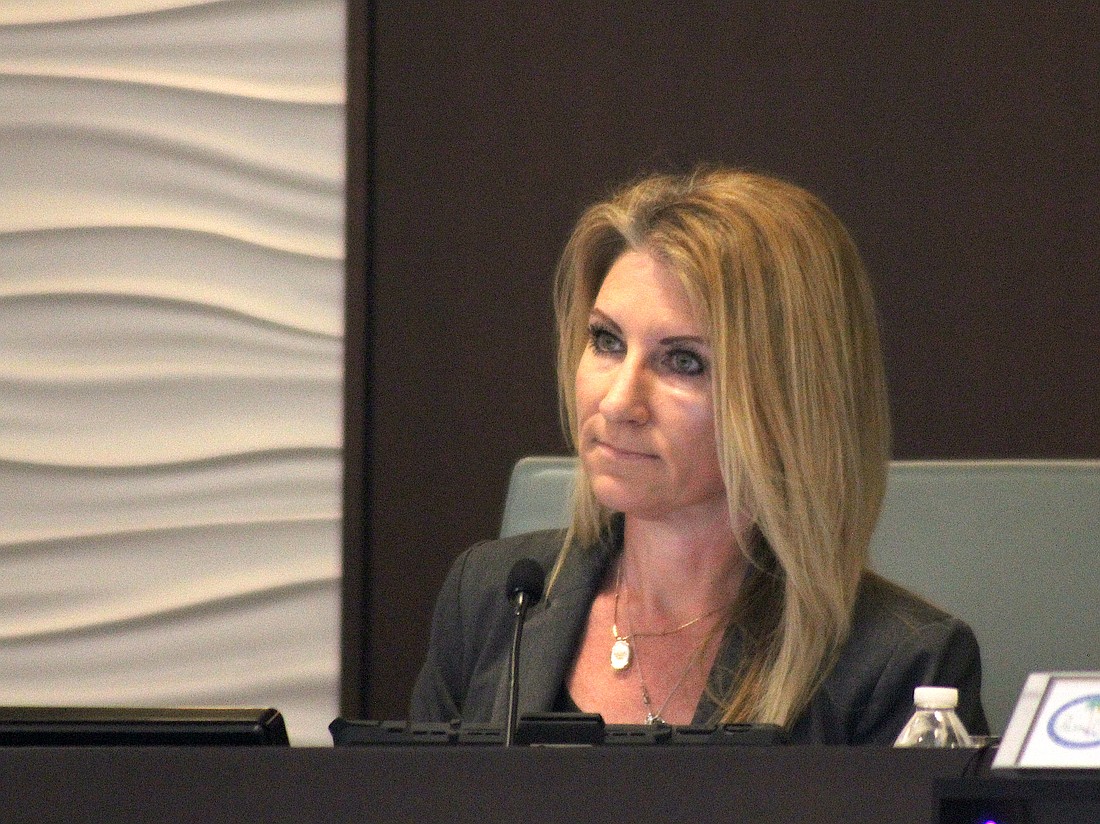
Vice Mayor Theresa Pontieri, who brought the issue forward, said she has seen direct potable reuse pilot programs and discussions elsewhere in Florida and wanted Palm Coast to establish its position.
“This is something that I brought forward because I am seeing pilots and this type of reuse be at least discussed all around the state,” Pontieri said. “And it’s a concern of mine for a lot of reasons.”
Pontieri also tied the ordinance to concerns about development and the pressure growth can place on the city's water resources.
“Believe it or not, this is a way to protect from overdevelopment because this is saying, you will not make us reuse our potable water in this way,” Pontieri said. “We have to rely on other ways to get it done.”
She said the ordinance would establish a clear policy for the city's future water decisions.
“This does kind of put a stake in the ground that says we are going to make sure that we are water conscious with our development decision,” Pontieri said.
The ordinance was presented for council direction at the workshop. Pontieri said she looked forward to seeing it return for first and second readings and “getting across the finish line.”